Commercial
Spec Office Stands Out with Mass Timber
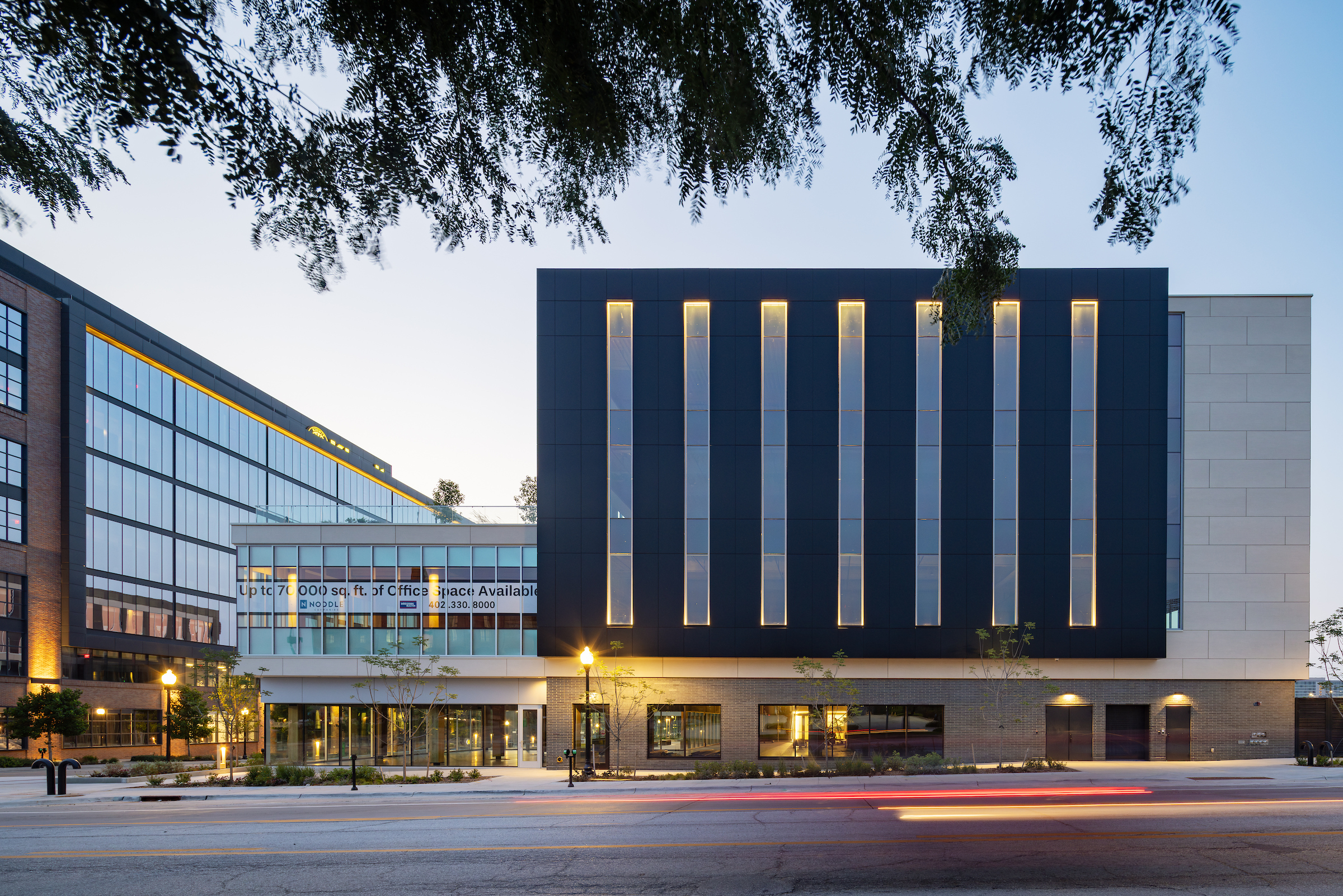
Amid a glut of unused office space, developing a new office building on spec seems counterintuitive. But the post-pandemic flight to quality gives new, well-designed spec office space a unique advantage by offering workplaces people will choose over working from home—spaces defined by daylight, flexibility, access to outdoor amenities, and a stronger connection to material and place. At 1501 Mike Fahey in Omaha, Nebraska, HDR used hybrid mass timber construction as a central feature, showing how its strategic use can pencil out not only on cost, but also on long-term performance and tenant appeal.
1501 Mike Fahey
Designing for a Different Office Market
As developer Noddle advanced plans for a new spec office building in Omaha’s Builder’s District, one thing was clear: the market had changed. Before COVID, office design prioritized density, but hybrid work has shifted the focus toward creating workplaces people actively choose to use. Tenants were no longer choosing buildings on space effectiveness and cost per seat alone, but on experience—light, materiality, and access to outdoor space. Mass timber quickly entered the conversation as one way to meet those expectations—though not without scrutiny. “They were really interested in making this one of the first true mass timber projects in the Omaha area,” says Bill DeRoin, design principal and associate vice president at HDR. “But the numbers needed to work. The client needed to vet the process and manage risk.”
To test whether timber could pencil out, HDR developed multiple structural scenarios, comparing a full mass timber scheme, several hybrid options, and a traditional baseline.
The exercise revealed a practical constraint: While a full mass timber structure offered strong experiential benefits, this particular project required some significantly long spans while keeping costs down. “When we looked at the full mass timber option, it came in at approximately a 15% premium over the baseline. Not astronomical, but enough to go back and sharpen our pencils,” DeRoin says.
1501 Mike Fahey
Noddle was keen to bring mass timber into their portfolio, so they chose a hybrid approach that deployed mass timber selectively, trimming the costs by about 10% compared to a conventional concrete and steel baseline. “The hybrid structure of mass timber and steel allowed us the flexibility of grid spacing and the long spans that work best in an office environment,” says Lisa Miller, president of Noddle Architecture, “while still incorporating the warmth and natural beauty of wood.”
“We used the mass timber where it would have the most impact,” DeRoin says. “The approach balanced cost and performance, bringing the overall structure in line with the project’s budget while preserving leasing flexibility. It’s a good example of how materials can complement the demands of spec office projects, where you’re needing to control risk.”
1501 Mike Fahey
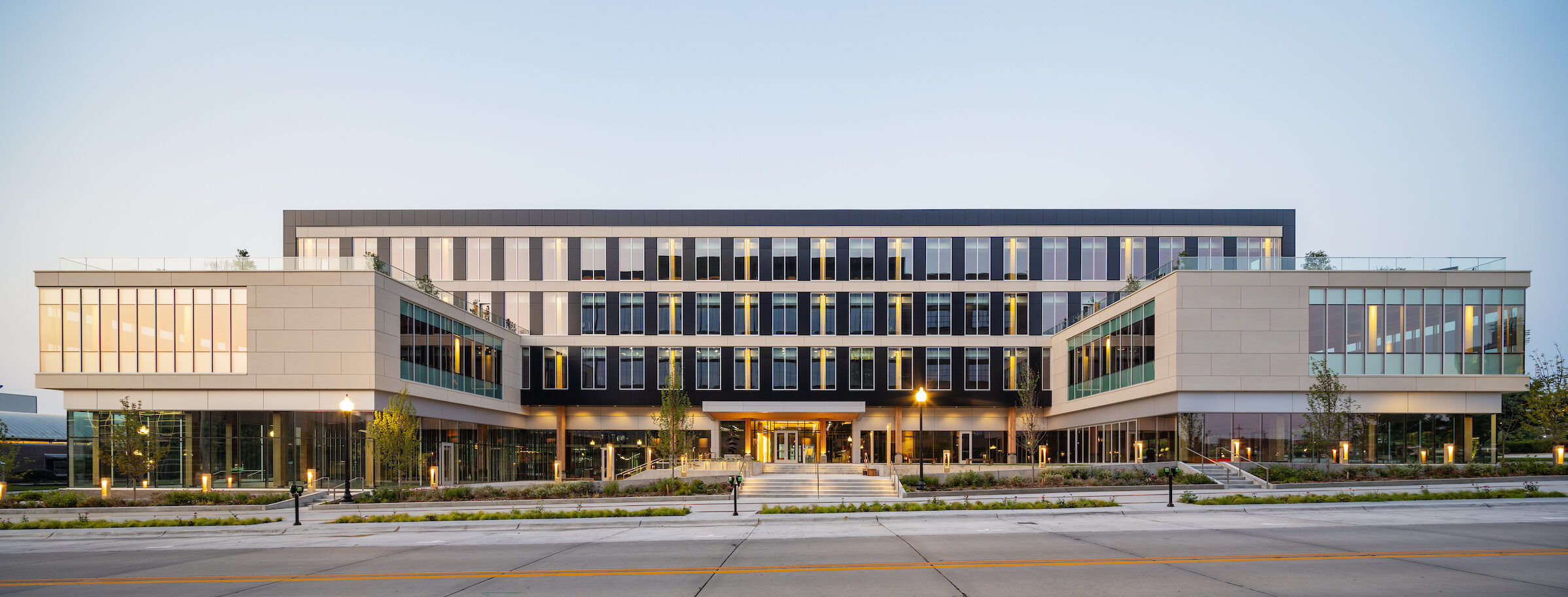
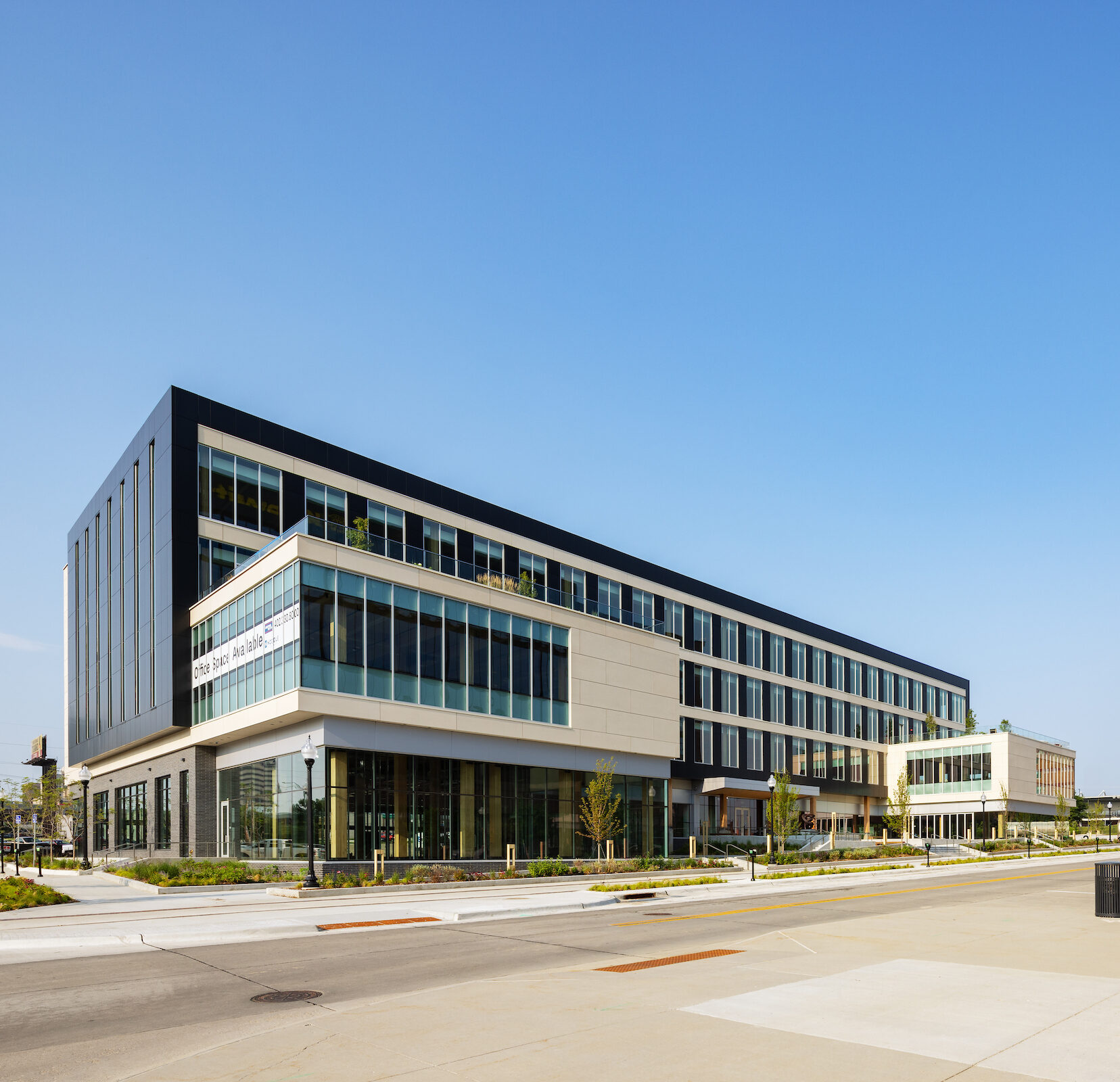
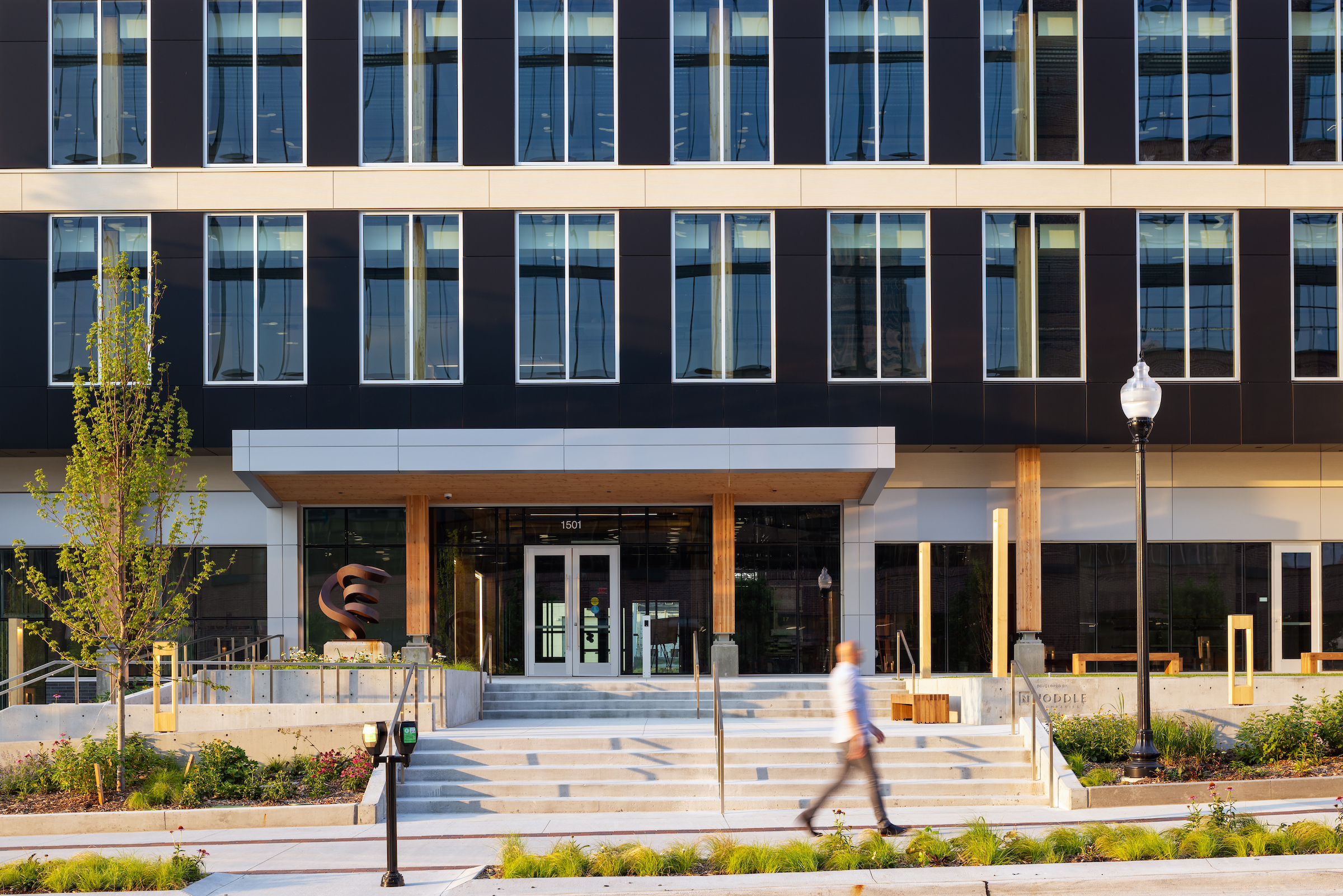
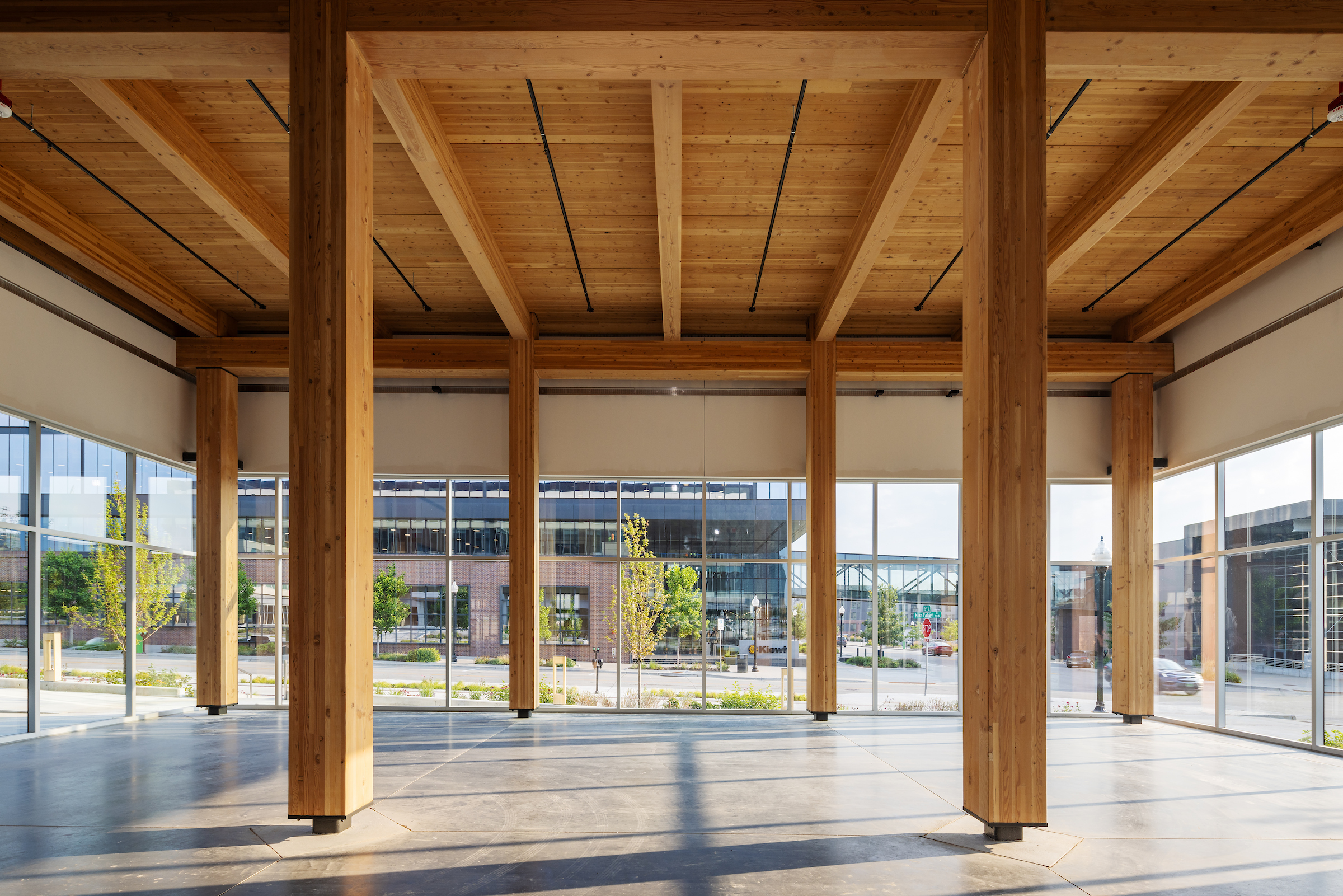
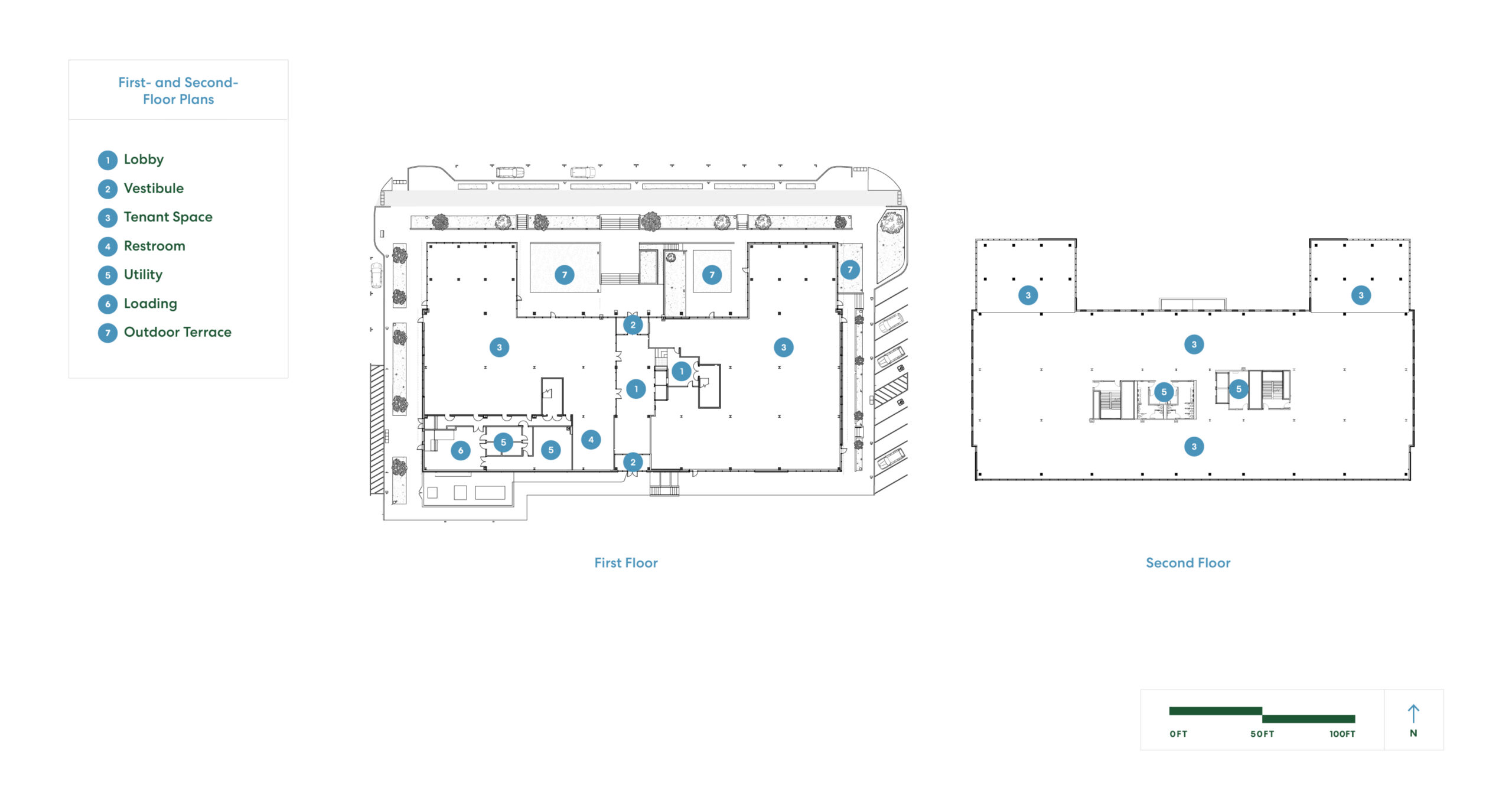
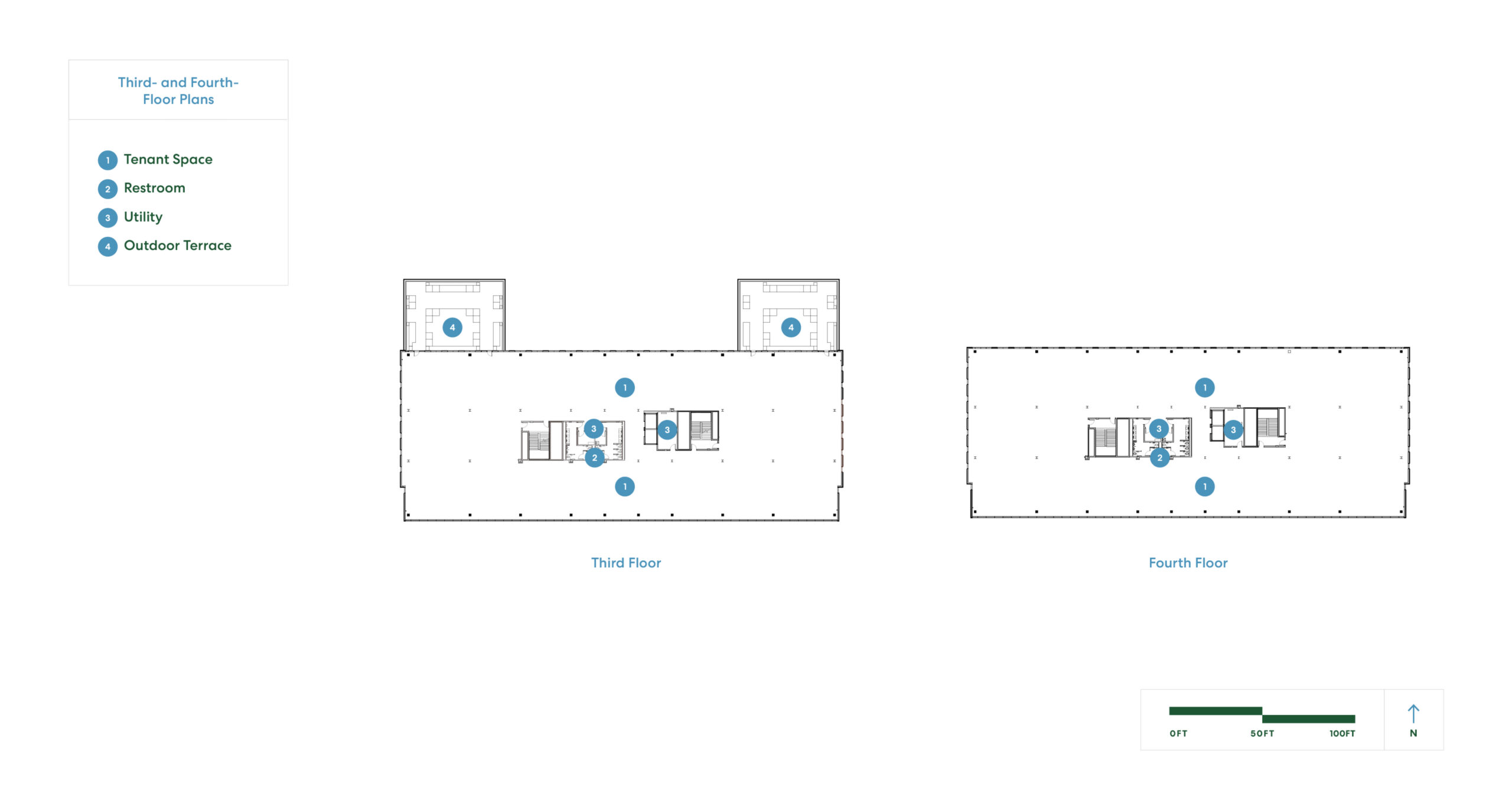
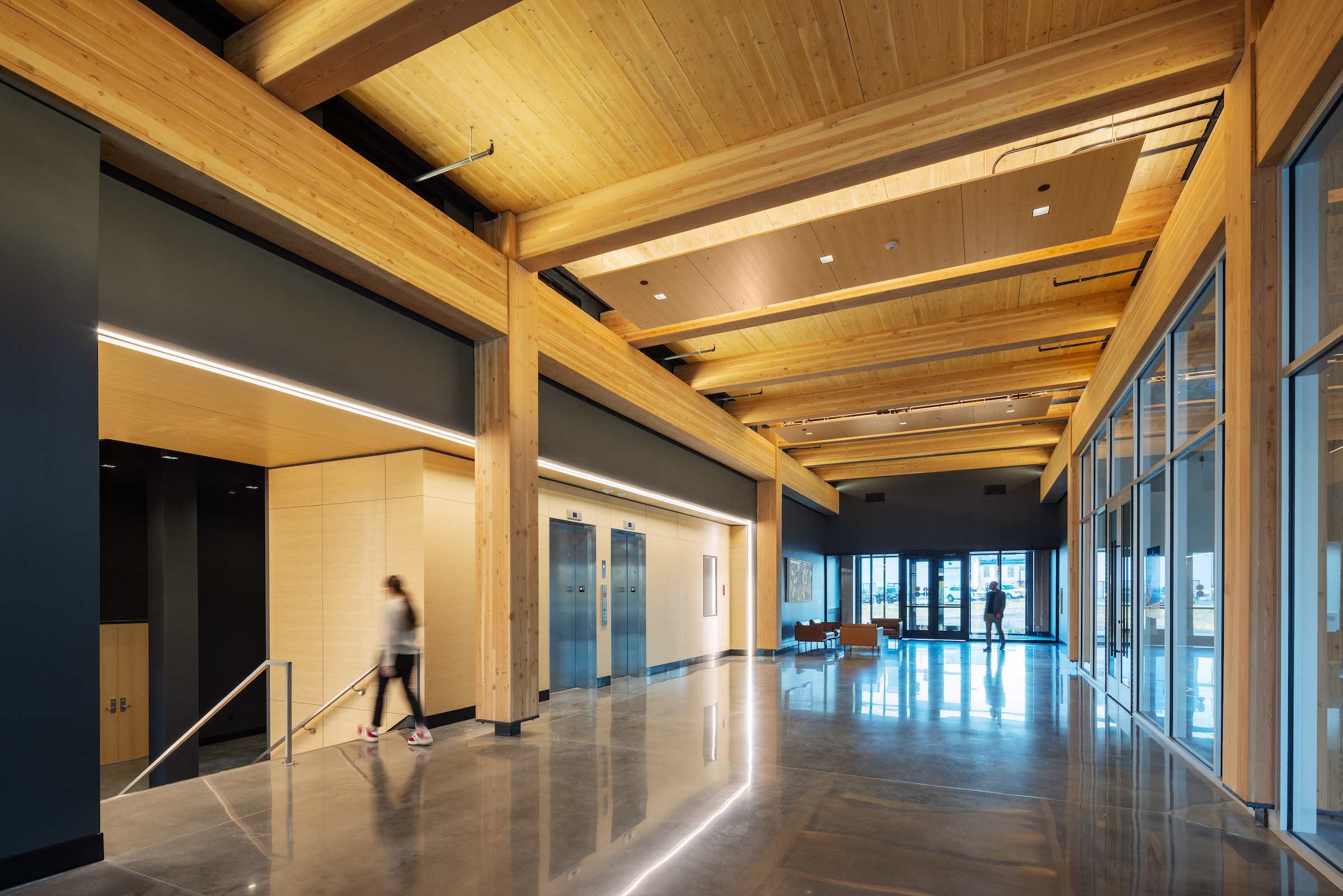
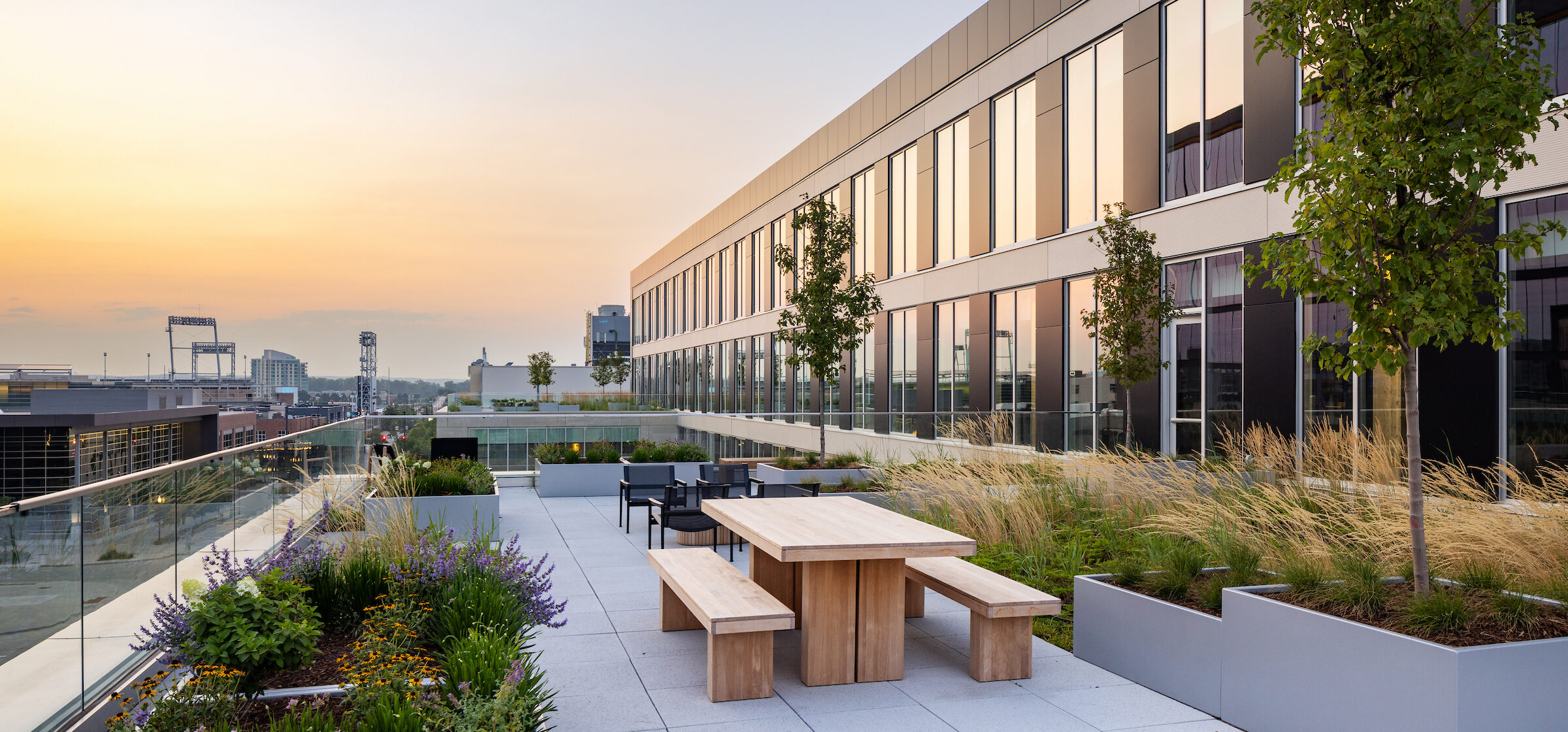
The main volume of the building is a four-story steel-and-concrete structure with two-story mass timber terraced wings that extend north along Mike Fahey Street. A mass timber lobby connects the north entrance of the building to a new park at the south end of the building. The two terraced wings—constructed with glulam columns and beams and CLT floor panels—serve as highly visible “jewel boxes” of exposed structure. Mass timber elements continue along the building perimeter, while the main office volumes rely on a more conventional steel frame.
Working with the structural grid, the design team created integrated zones for mechanical and electrical distribution, allowing services to be routed without disrupting the exposed timber ceilings. “What that allowed us to do was create those chase spaces so tenants could route ductwork and other utilities without cluttering the ceiling,” DeRoin said.
Beyond the mass timber, the building incorporates advanced systems to optimize operations and lighting. Automated controls—including scheduling, photocell daylight harvesting, and deployable roller shades—improve energy efficiency and comfort. In the lobby, a calibrated lighting strategy subtly illuminates the exposed CLT without revealing the source.
1501 Mike Fahey
1501 Mike Fahey
1501 Mike Fahey
Giving New Lease to Office Life
Ultimately, the design decisions at 1501 Mike Fahey were driven by a shift in how office space is valued. “This was a spec office building coming out of COVID,” DeRoin says. “The question was, how do we drive people back to the office?”
For the developer, exposed mass timber became a key part of that strategy. Its visual warmth and connection to biophilic design principles aligned with broader efforts to create engaging, wellness-driven environments, complemented by outdoor terraces, green space, and connections to the surrounding district. “They were really interested in this idea that these biophilic spaces are something people will be looking for,” DeRoin says.
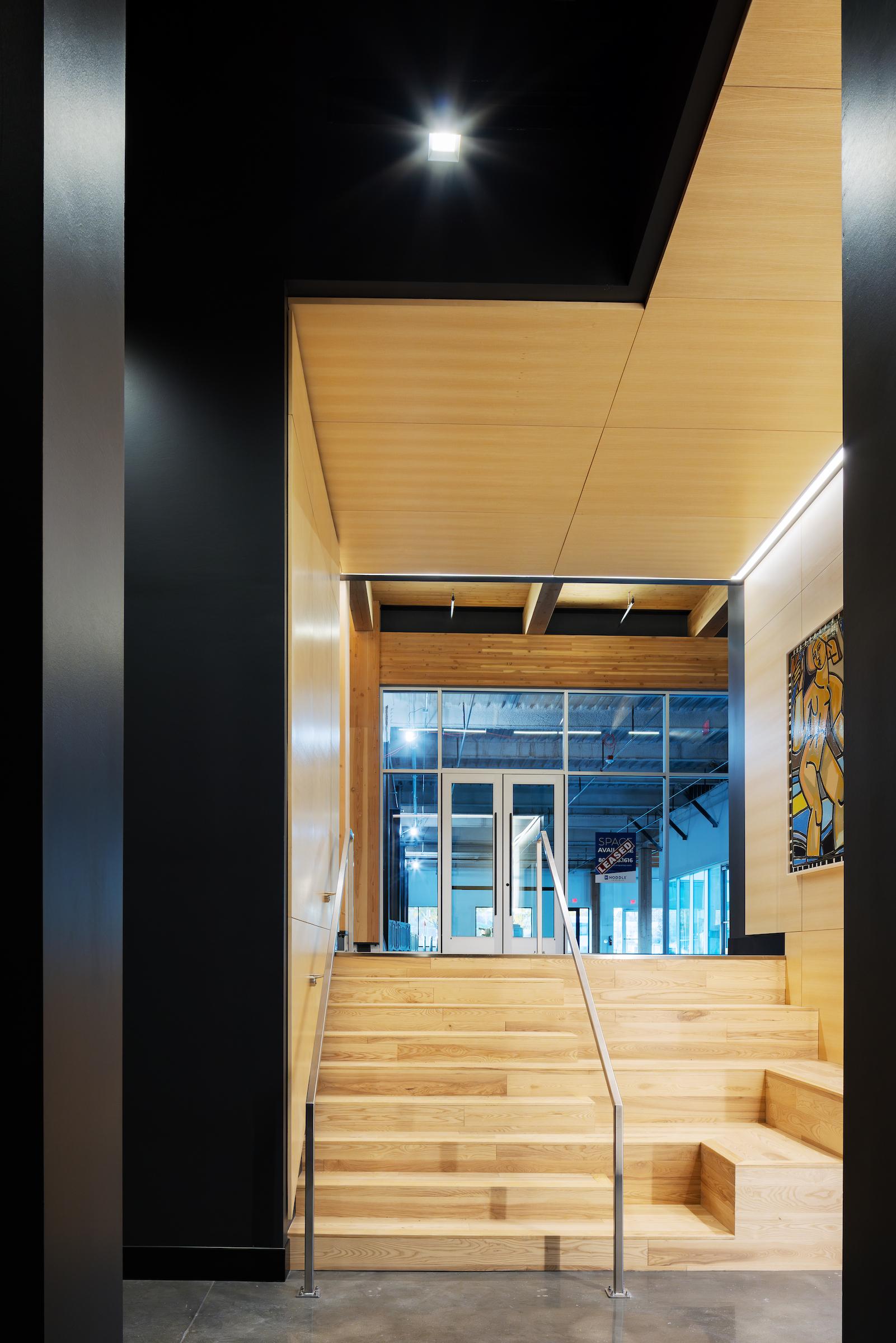
“From a leasing perspective, the mass timber lobby welcomes tenants with an impressive, yet warm entry,” Miller said. “I think the primary impact of the timber is an emotional reaction,” Zac Gemar, Noddle’s vice president of construction says. “Everyone loves the look and feel of the timber areas. I’m certain it has helped influence tenant’s decisions when considering the building.”
And early leasing suggests that approach is resonating, with the full mass timber wings being the first ones that got leased. DeRoin points to strong tenant interest in spaces where the mass timber structure remains visible. Those areas also offer practical advantages: With the structure exposed, tenants can avoid the cost of adding ceilings while gaining a more distinctive workplace environment—in many cases supporting higher lease rates.
1501 Mike Fahey
While the mass timber system carried a premium, it was manageable and ultimately “an investment in the narrative we wanted to build around the project,” Gemar says, adding that the hybrid approach helped lower costs. And Miller pointed to the project’s influence on future work, noting that another hybrid timber building is already underway.
Beyond the project itself, 1501 Mike Fahey has helped shift local perceptions of mass timber construction. “This really became a template for future mass timber work in the region,” DeRoin says. As more developers and contractors gain familiarity with hybrid systems, the material is increasingly seen not as a niche or risky choice, but as a pragmatic tool—one that can help spec office buildings stand out, lease faster, and ultimately perform more strongly over time.
As Miller sees it, more than ever, tenants are striving to provide workspace that is amenity-rich, health- and sustainability-oriented, and purposeful. “We believe the addition of mass timber helps tell the story of how the building, down to its structural system, reflects those values. Now when starting a project, mass timber has become part of the discussion early on,” Miller says.
1501 Mike Fahey
1501 Mike Fahey
Project Details
- Project Name:
- 1501 Mike Fahey
- Location:
- Omaha, NE
- Building Type:
- Speculative office (Class A)
- Architect/Structural Engineer:
- Developer:
- General Contractor:
- Mass Timber Supplier:
- Timber Products:
- Photographer:
- Size:
- 115,000 sq ft