Porch Goals: 5 Wood Outdoor Living Spaces to Love
March 20 may be the official start of spring, but it is only now that much of the country is starting to feel the warm-up. With outdoor furniture covers coming off and patios getting de-cluttered, homeowners are taking stock of their own outdoor environments and thinking about the needed repairs and renovations to come. As you design or build their next outdoor retreat, check out these five stunning examples to see how marrying the warmth of wood with impeccable detailing and perfectly framed views can create the type of outdoor sanctuary that both nature lovers and homebodies can enjoy for years to come.
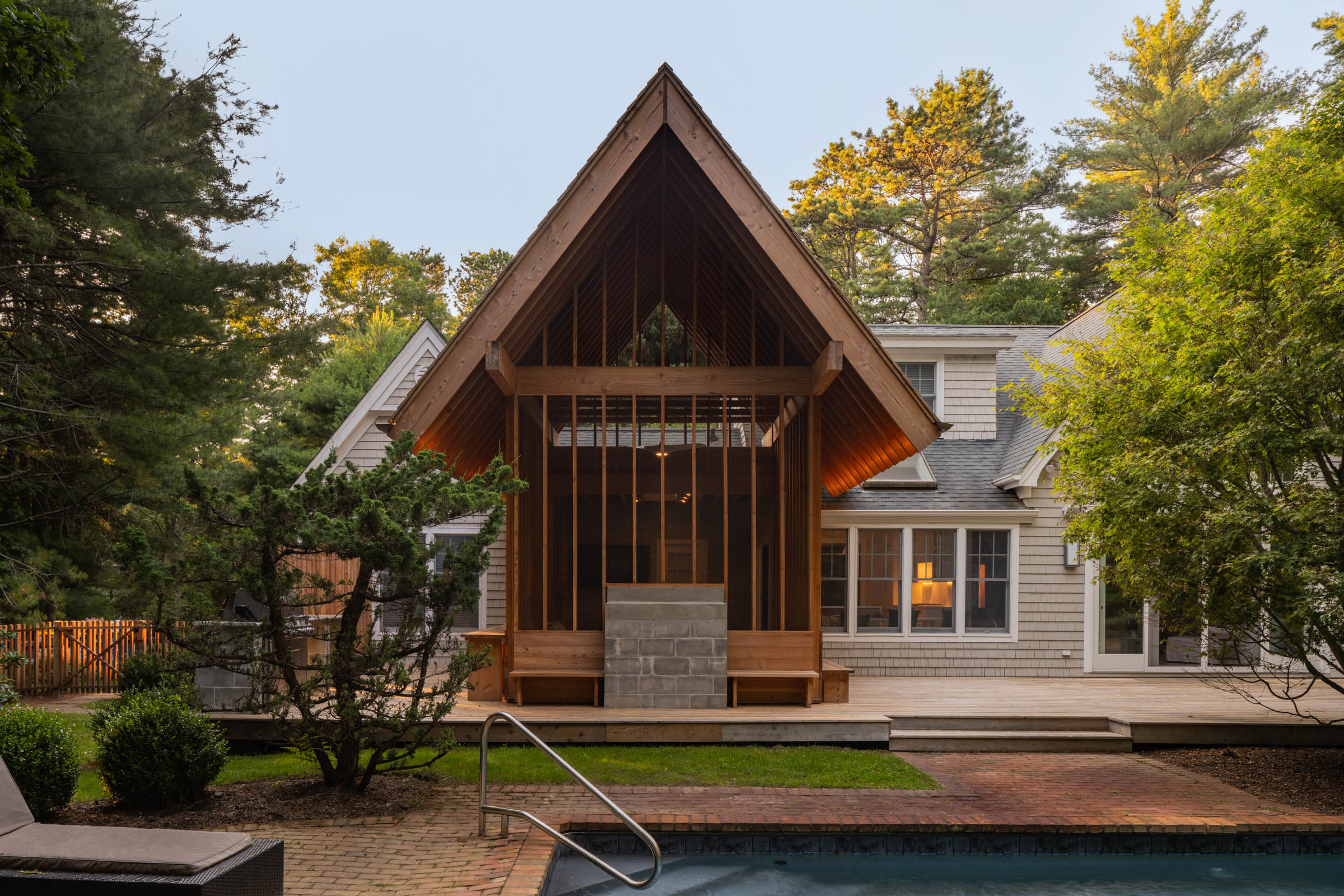
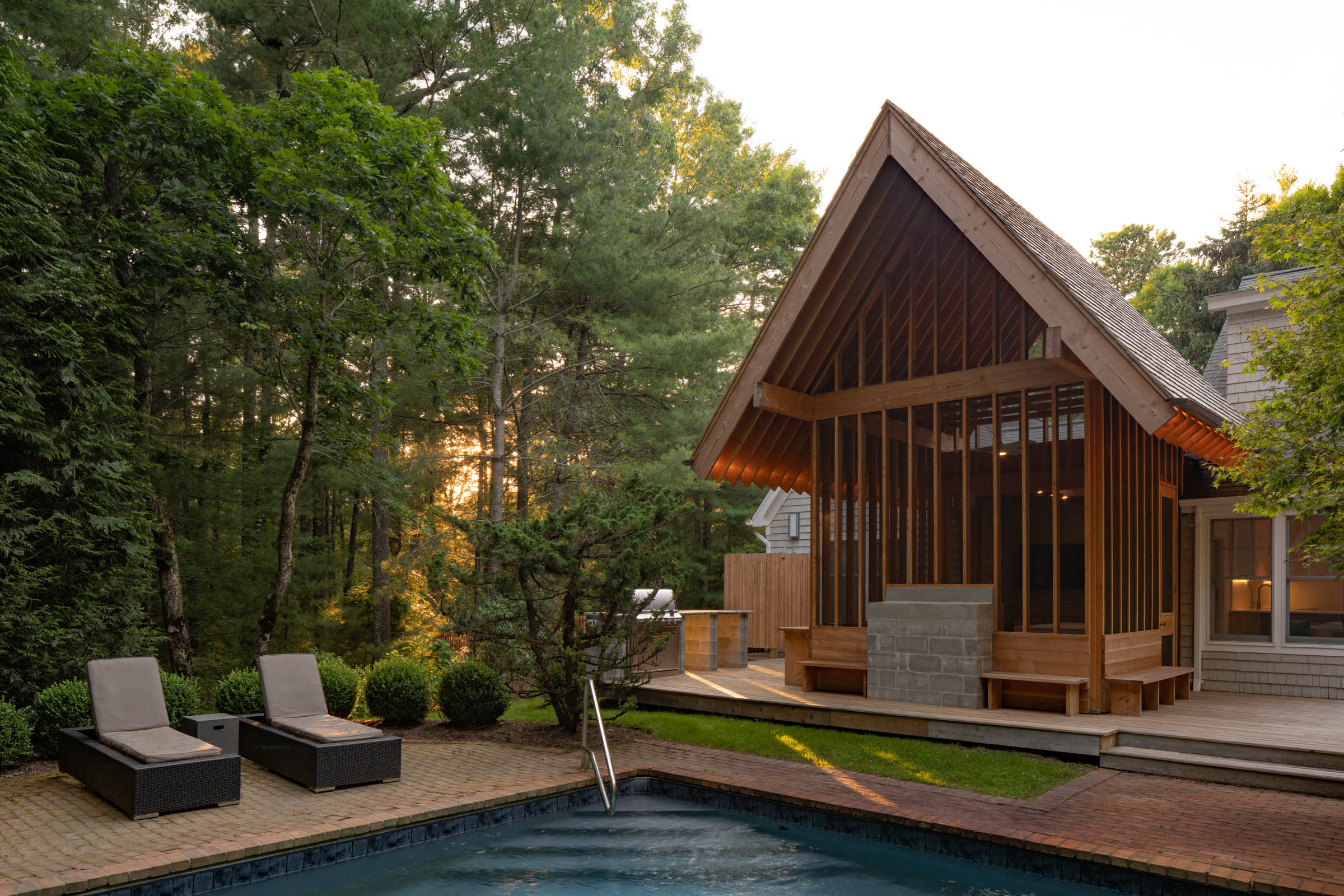
Swampy Hollow
East Hampton, NY Architect: BLDUS
Proving that even the simplest materials can be elegant, the screened porch designed by BLDUS for the home at Swampy Hollow creates cathedral ceilings and dramatic walls using just the humble 2×4. Designed to be easily constructed with simple framing techniques, the 250-square-foot outdoor oasis is high on drama and short on complexity. The roof construction nods to the neighborhood style by using cedar shingles, long the go-to roofing material in the area, over 2×12-inch Douglas fir rafters. Despite its small size, it includes a dining area, seating area, and outdoor fireplace, making it a four-season outdoor oasis for the residents. Compact, clever, and versatile, Swampy Hollow shows that with a little ingenuity, basic wood materials can create a magical environment for users.

Feldmann Residence
Woodland, MN Architect: David Salmela
Minnesota is known for its long winters, which makes residents want to make the most of the outdoors while they can. At this house overlooking Lake Minnetonka, architect David Salmela designed the perfect space to do just that. An open-air porch projects from the second story, supported by deep glulam beams and lined with cedar slats to offer privacy and protection from the elements. The slats allow for fresh air and views out, but are close enough to one another to block most direct sunlight and prevent heat gain. The result is a warm yet private outdoor space that lets residents use it in the shoulder seasons, as well. And while it wasn’t designed to be a sleeping porch, Salmela leaned into the fact that it came to serve that function in the summer months, designing couches that can be made up into beds for those who want to camp out at home.


House Between Forest and Field
Stanfordville, NY Architect: nArchitects
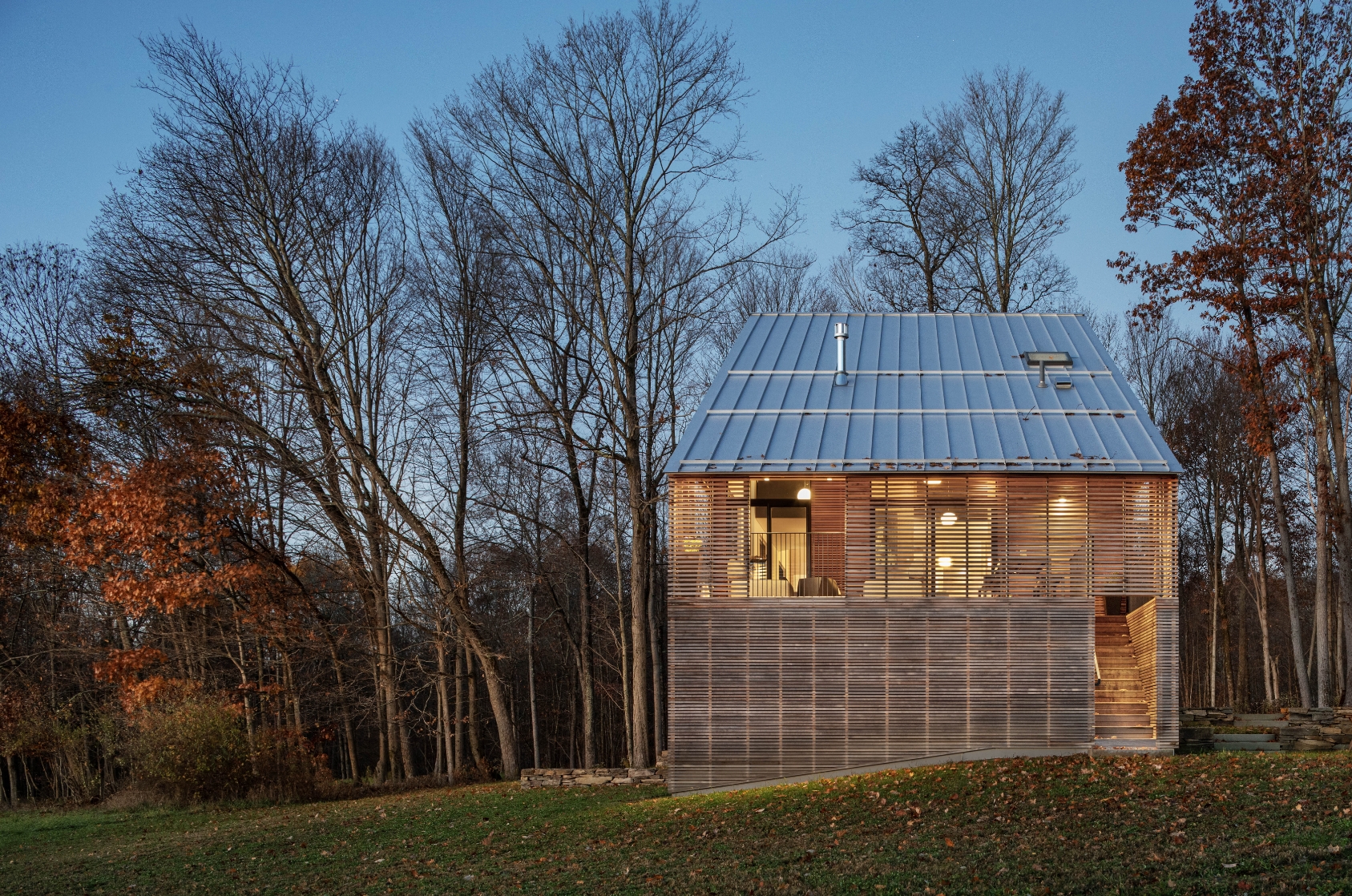
This second-story covered porch serves as the heart of the House Between Forest and Field and acts as an extension of the adjacent living room. The team at nArchitects designed the porch to be open to the air but surrounded by cedar slats that mimic the rest of the house’s siding; this makes the porch feel private and enclosed while still providing views to the bucolic surrounding landscape. Sitting under a full roof, the porch stays cool in the summer and keeps out the worst of the chilling wind in the winter, ensuring that the residents can use it all year long. Supported by thin, one-inch-square steel stack bars every two feet, the cedar slats seem to float in midair, lending a delicacy that highlights the benefits of hybrid structures and giving an ethereal quality to the private retreat.

Flex House
Sacramento, CA Architect: Johnsen Schmaling
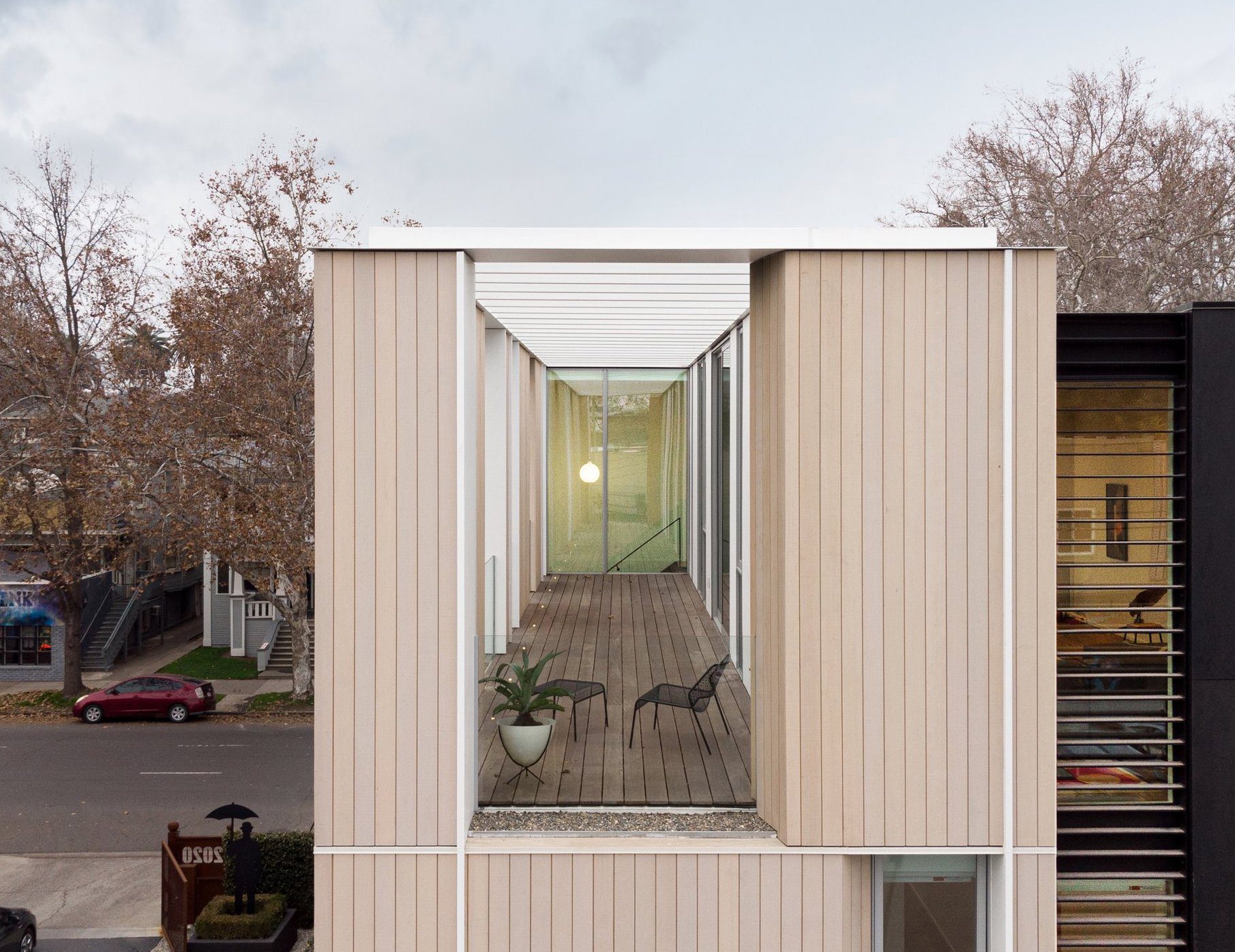
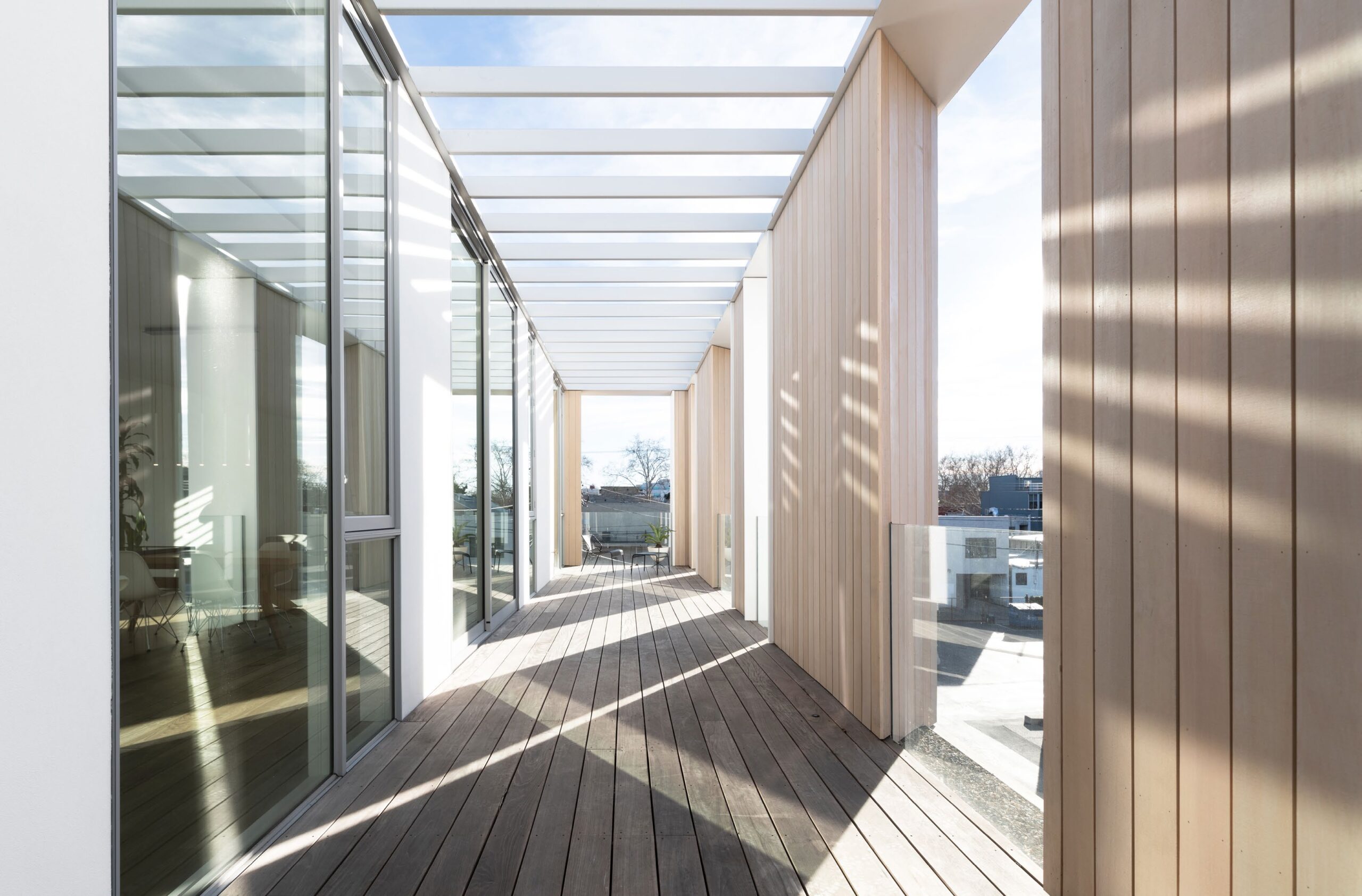
Atop a mixed-use volume that combines townhouse and flexible commercial functions sits this urban oasis above the streets of Sacramento. The top-level porch at the Johnsen Schmaling–designed Flex House combines air, light, and views with screening and privacy, striking a balance that lets the best parts of the city in, while screening the worst out. Alaskan yellow cedar forms the walls and floor of the expansive deck, lending warmth and some acoustic screening, while wood slats above help provide some respite from the Central Valley’s hot summer sun.
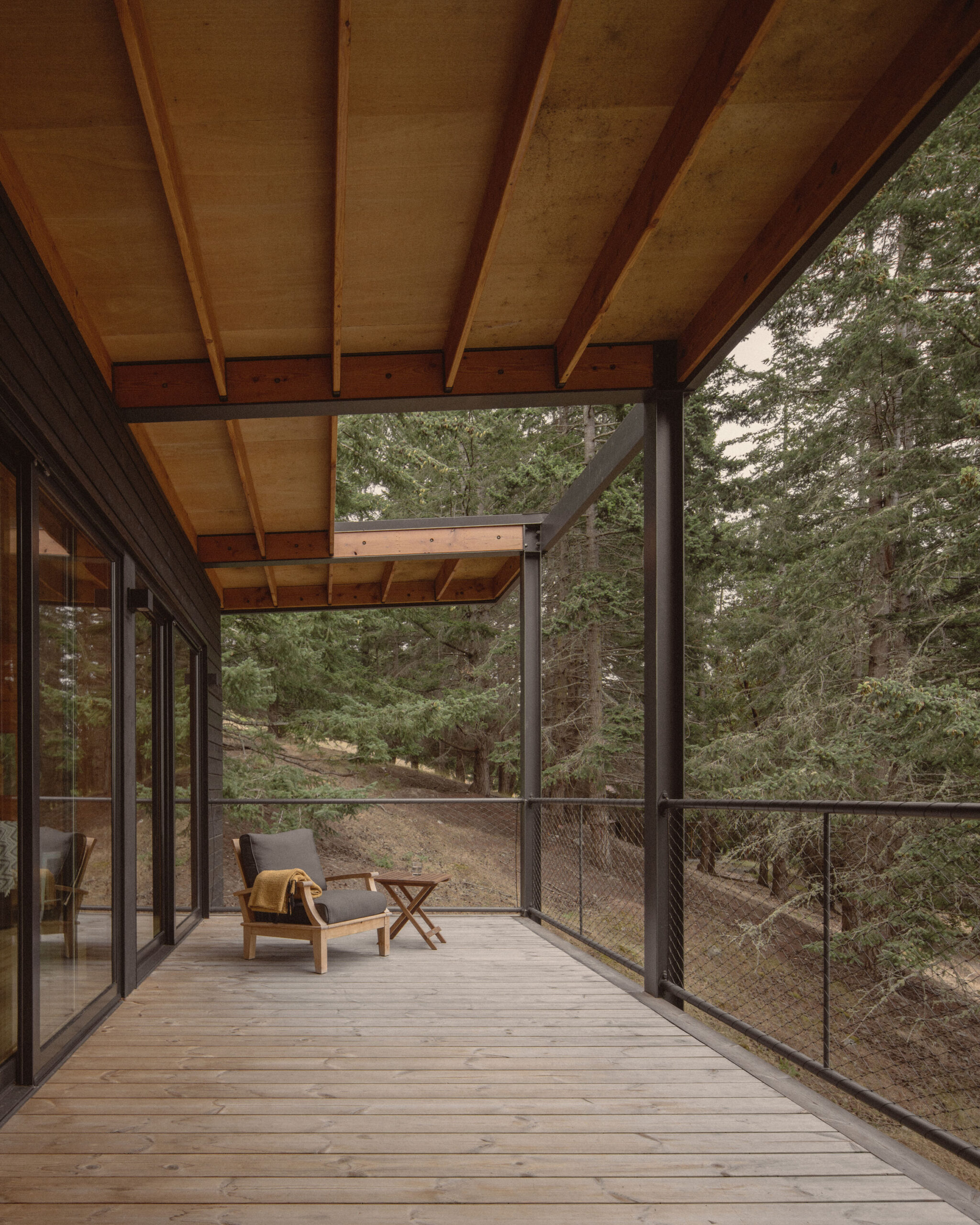
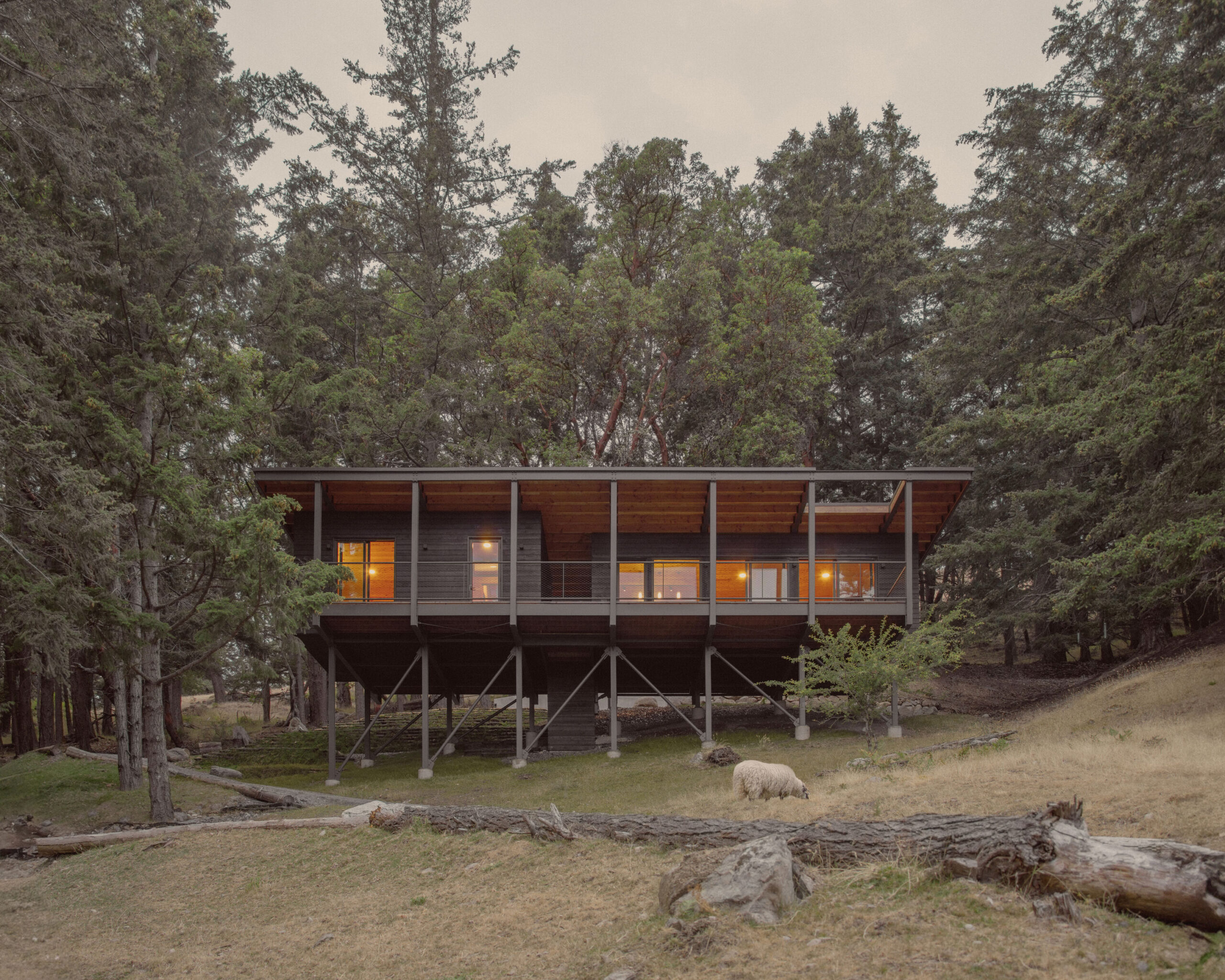
Trestle Cabin
Decatur Island, WA Architect: Miller Hull Partnership General Contrator: Kaplan Homes Unlimited
To create a cabin with minimal impact on the remote Decatur Island in Washington State’s San Juan Islands, Miller Hull looked to minimize materials—inside and out. Two volumes—framed in Douglas fir and clad in cedar—house the living spaces, while all circulation between them is the province of the expansive covered steel-and-cedar porch. This means that the jaw-dropping views aren’t just to be enjoyed from the seating area suspended between the treetops, but rather every time the residents use the open-air corridors to travel between living and sleeping quarters. Designed for minimal material use and maximal resilience, this wood porch provides a lot of function alongside its serene and cozy form.