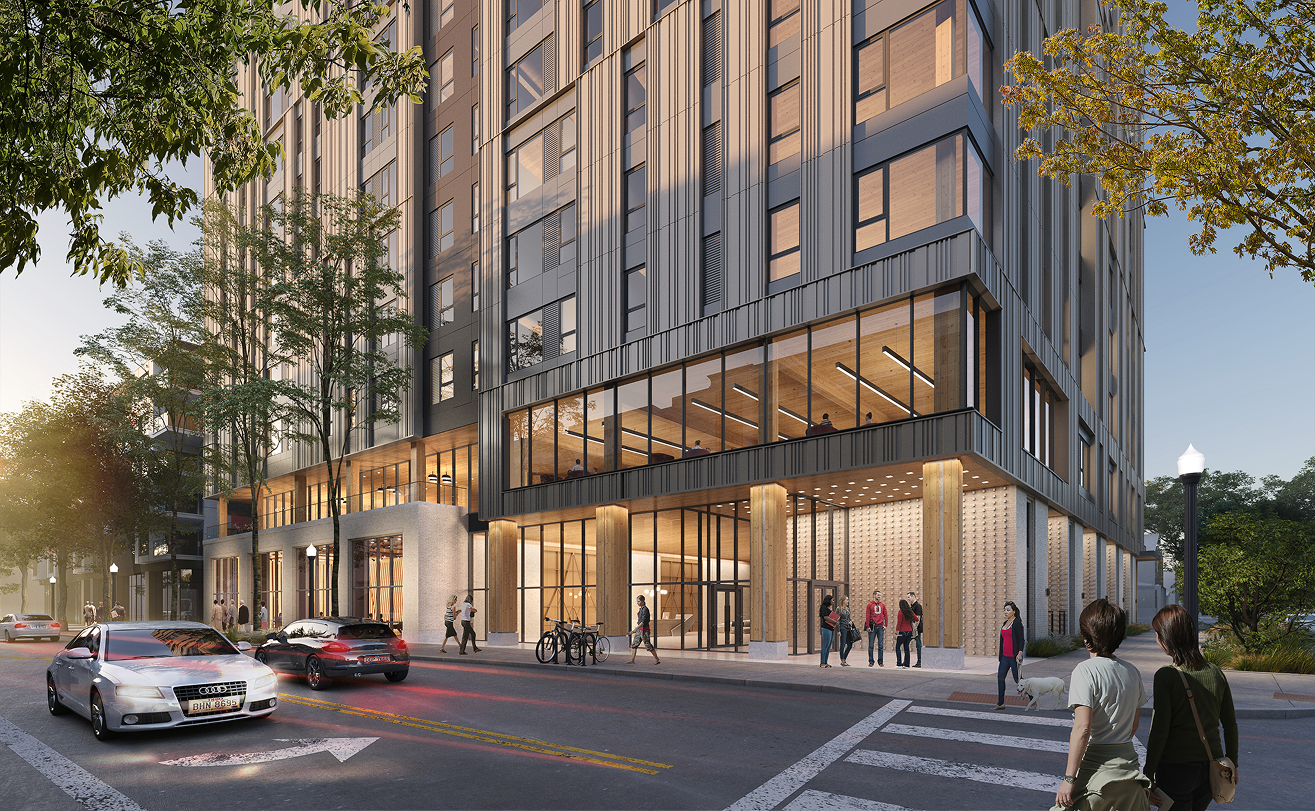
Designing a Smarter Class of Student Housing
From residential towers to large-scale mixed-use projects, design teams throughout the country are increasingly choosing mass timber for its architectural appeal and lower carbon footprint, as well as its offsite prefabrication advantages. “When done right, mass timber lets us build the same building with less labor and roughly 25–30% faster than a conventional post-tension concrete equivalent,” says Mark Bell, CEO of Harbor Bay Ventures. “When affordability and housing are in crisis, that kind of speed isn’t just a nice-to-have—it can be part of the solution.”
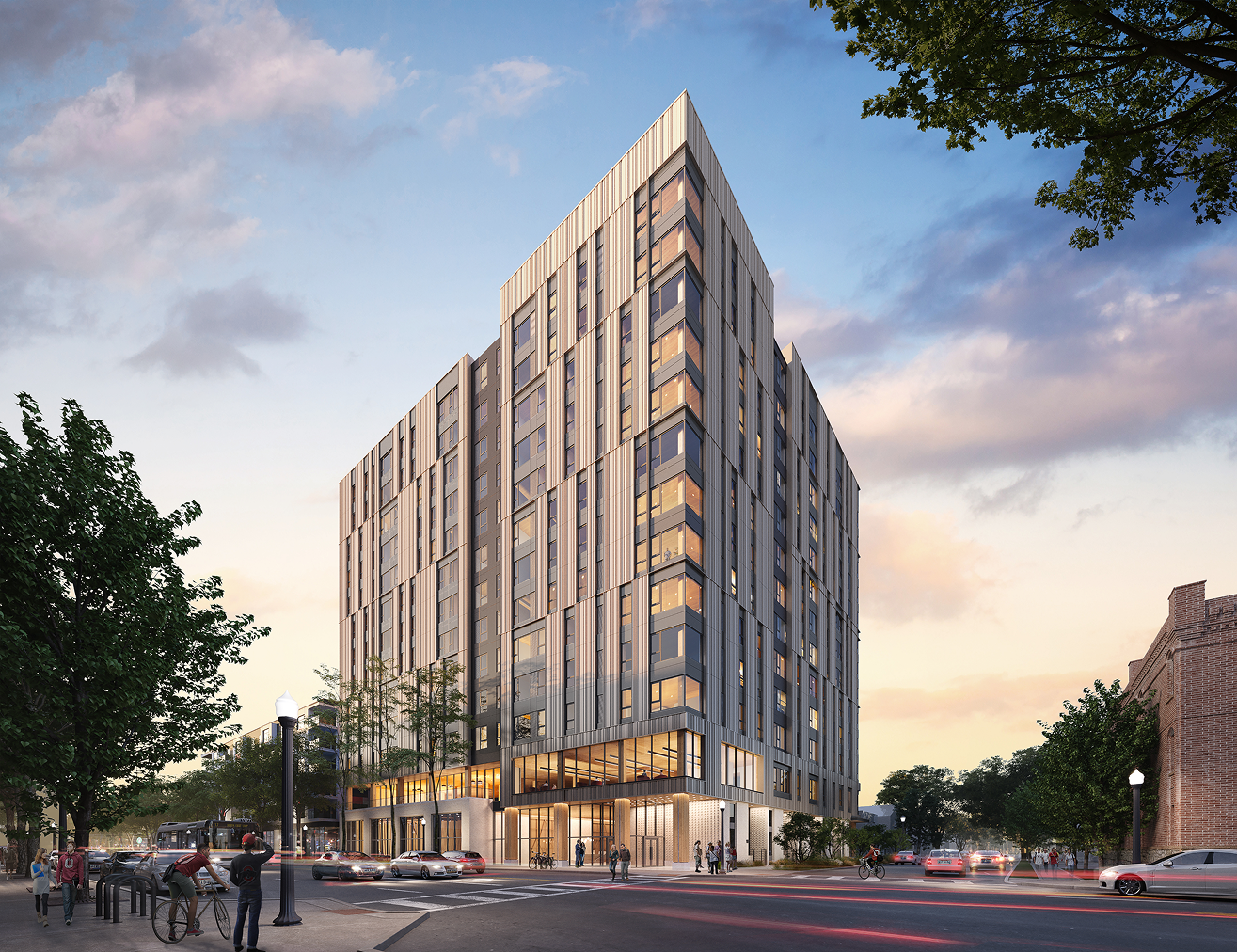
The Chicago-based developer—with the support of an experienced mass timber team including DLR Group, Forefront Structural Engineers, and SmartLam—is looking to realize these benefits in the construction of a landmark student housing project located at the corner of Columbus, Ohio’s High Street and Ninth Avenue—just minutes from the OSU campus. Projected to be the tallest mass timber student housing project in the United States, it’s an endeavor that could serve as a replicable prototype for student housing at campuses across the country, and its success hinges on understanding how to get the most out of mass timber construction.
And the Harbor Bay interdisciplinary team is not short on expertise. Harbor Bay Ventures cut its teeth on INTRO, a 350,000-square-foot mixed-use mass timber development in Cleveland that includes residential units, commercial space, and a central public plaza—one of the largest completed mass timber projects in the United States. Architecture firm DLR Group is widely recognized for advancing tall wood design and for a national portfolio of mass timber offices and mixed-use buildings (including the T3 developments) that balance practical replicability with refined design. Forefront, the project’s structural engineer of record and one of the leading mass timber engineering firms in the country, is known for deep expertise in CLT/glulam systems and the type of early-stage systems coordination that streamlines construction. SmartLam North America, the mass timber fabricator, brings U.S.-made CLT and glulam production capacity, detailed shop-drawing precision, and extensive experience delivering pre-cut, pre-drilled components for rapid onsite assembly.
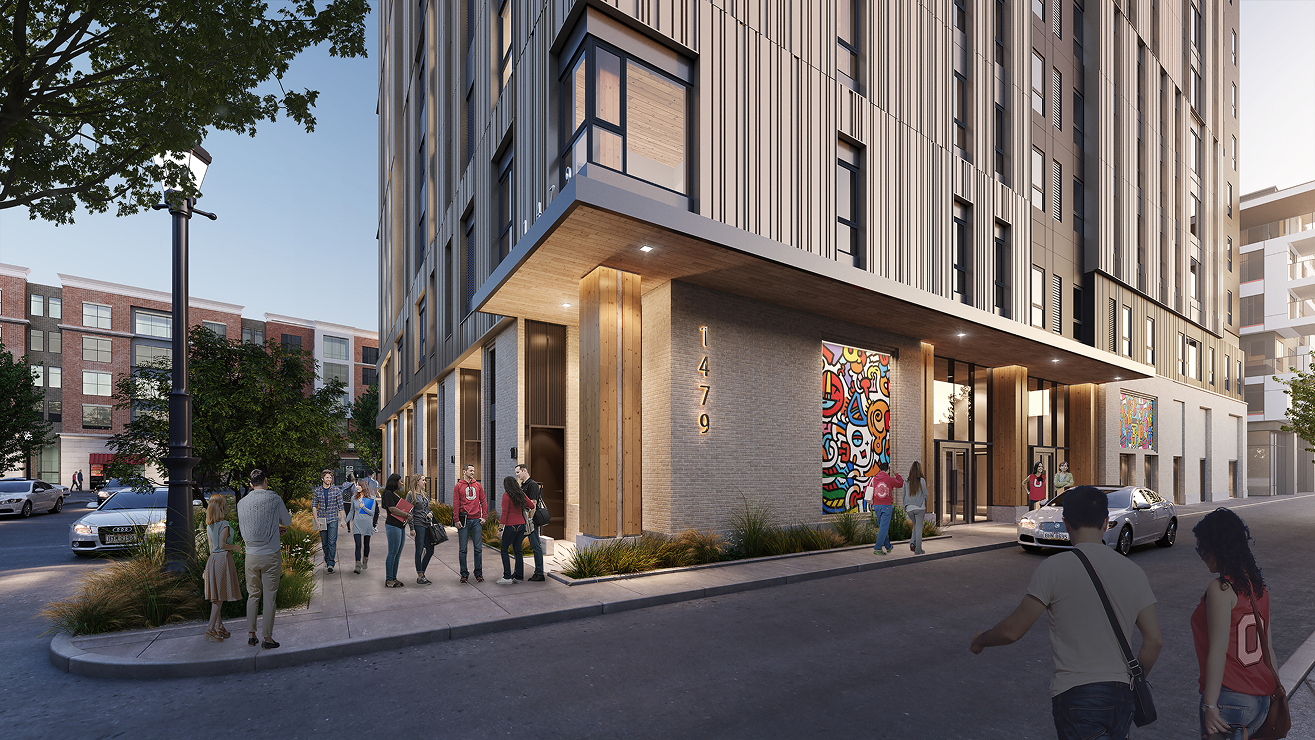
Slated for completion in summer 2027, the 13-story (12 stories of wood over a concrete podium) housing development will provide 186 units and 493 beds. This includes a mix of studio, one-, two-, and four-bedroom units arranged along efficient double-loaded corridors. Ground-level common areas—including a lobby, fitness space, study lounges, and resident amenities—activate the High Street façade, while the upper levels are formed by a stack of a repeating kit-of-parts plan framed in CLT floor panels and glulam beams. Most units feature exposed mass timber ceilings, and the building is designed to accommodate dense mechanical routing, generous natural light, and contemporary student-housing standards—all within a streamlined structural grid optimized for speed, cost, and replication.