Education, Light-Frame Construction
Leers Weinzapfel’s Nearly All-Wood Preschool Brings Nature to Play
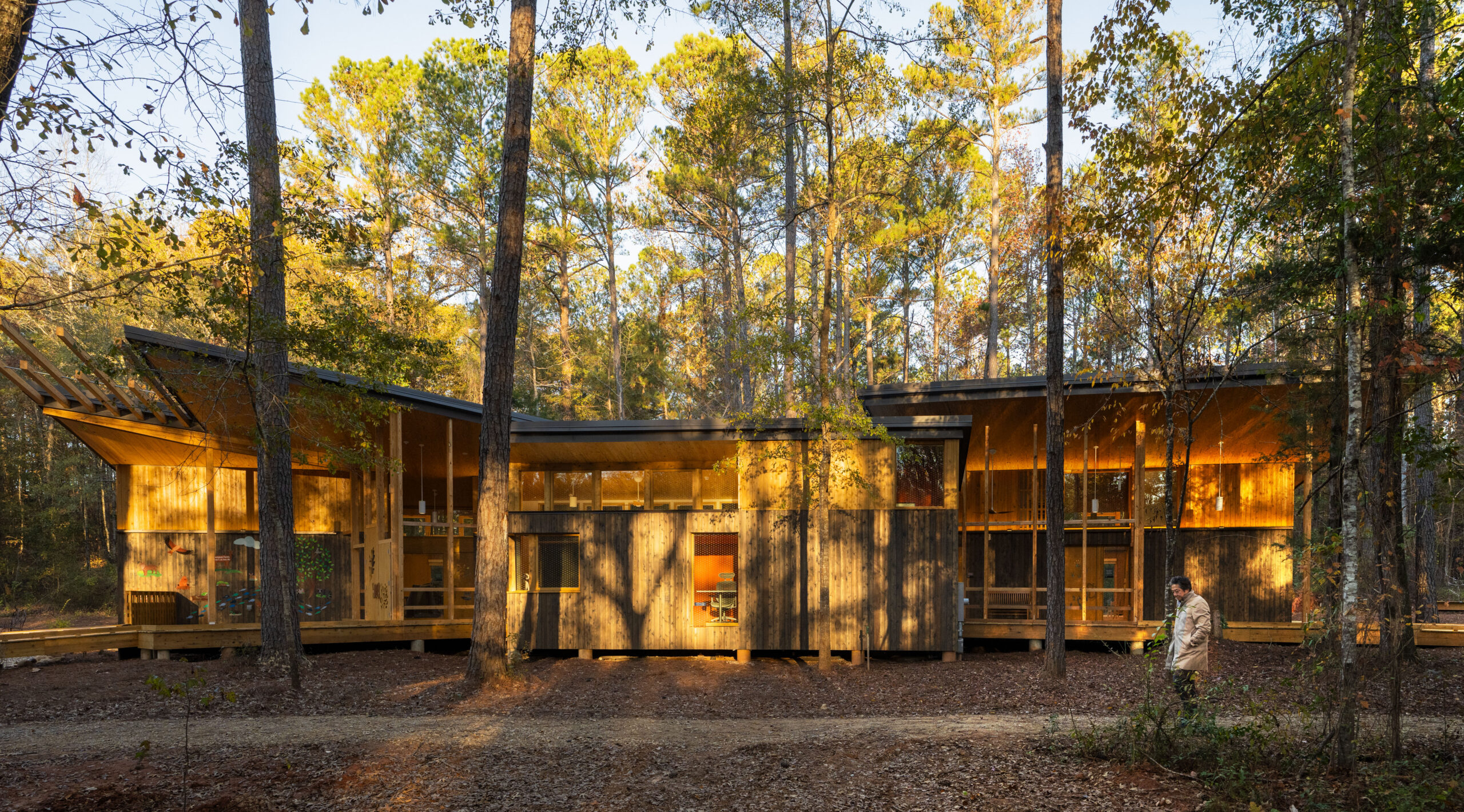
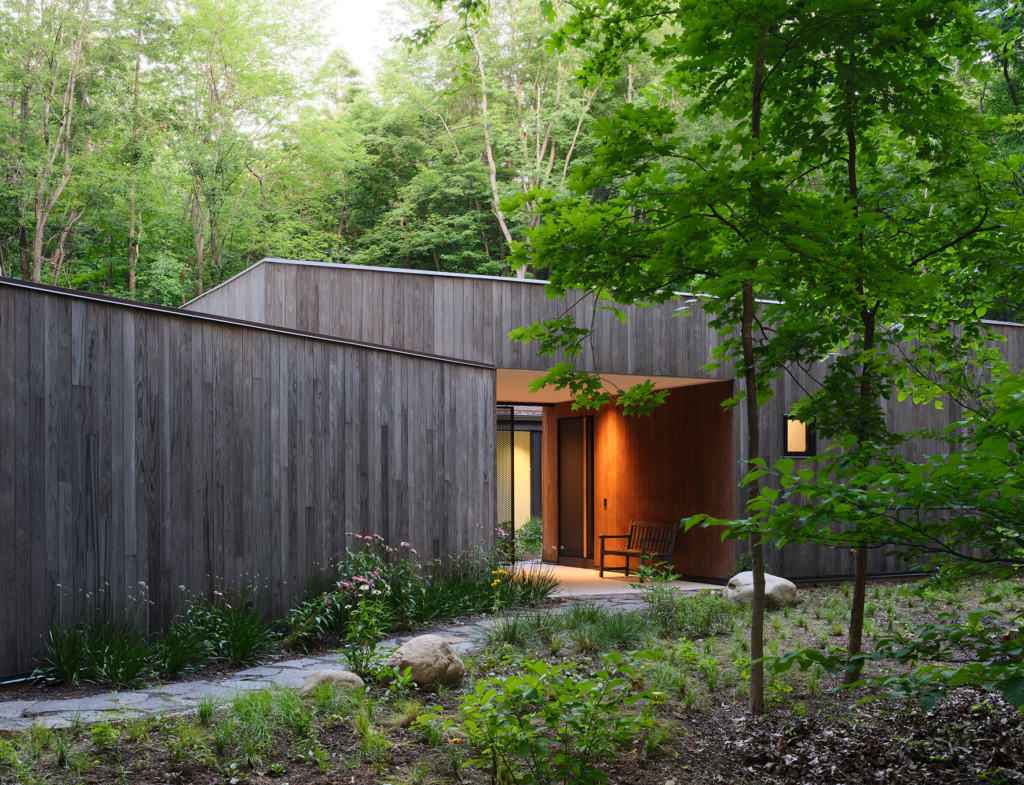
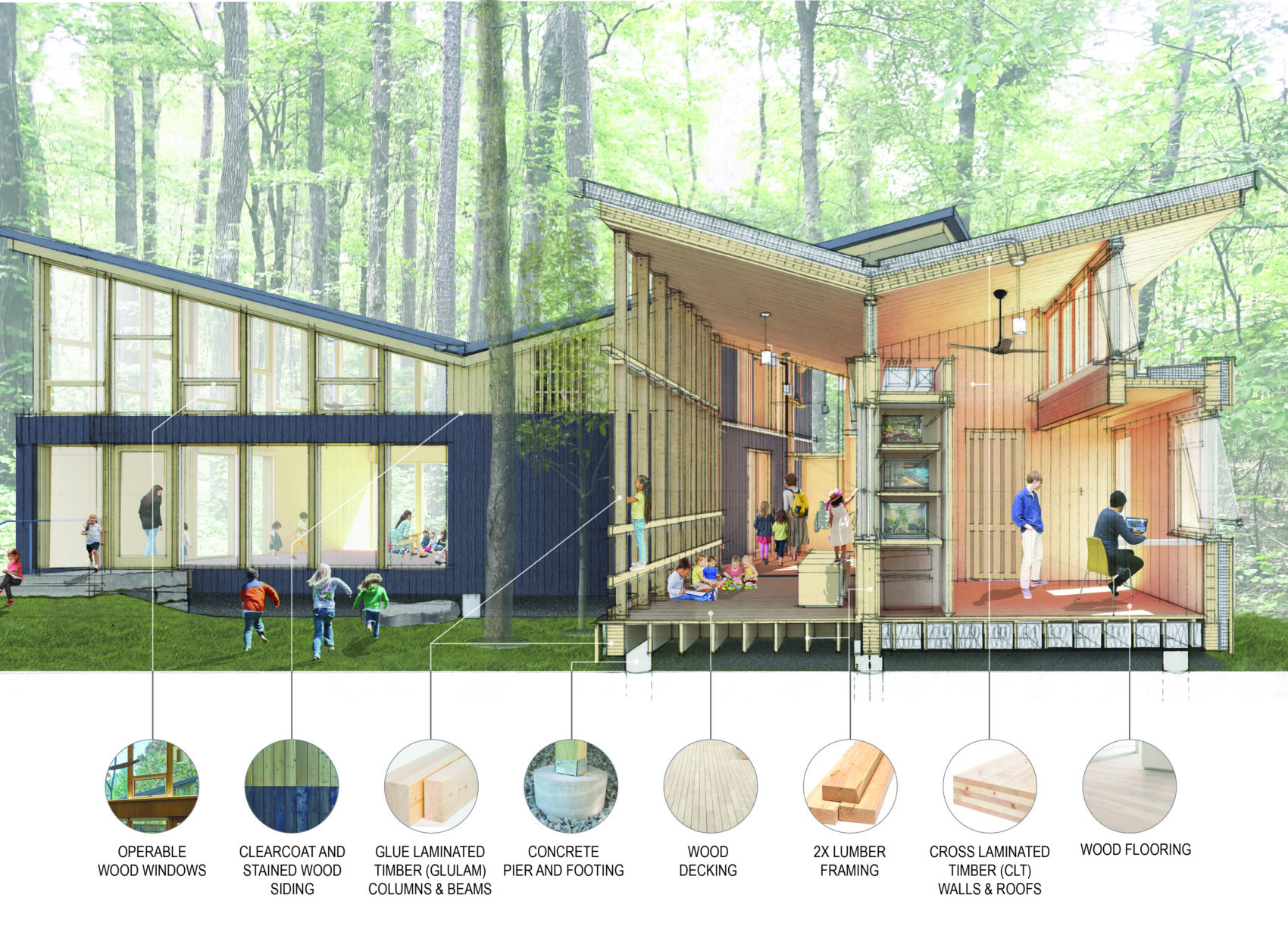
The Kreher Preserve and Nature Center Environmental Education Building sits lightly on the forest floor, with a mass timber butterfly roof that seems poised to take flight. Instead of a typical concrete slab, the nearly all-wood structure rests on concrete pier footings combined with glulam beams—a foundation strategy that minimizes ground disturbance and concrete use. The result is a smaller environmental footprint achieved through abundant use of wood, from CLT panels, light-frame infill, and glulam columns to cedar cladding, wood windows, and cypress trim. Prefabrication kept wood waste to a minimum while careful siting preserved existing trees, allowing the preschool to merge seamlessly with its forest setting.
Kreher Preserve and Nature Center Environmental Education Building
Rooted in Place: The Forest and Nature
as Classroom
“We were inspired by the preschool’s nature-based learning and the fact that the forest preserve is the teacher,” says architect Tom Chung, the lead principal at Leers Weinzapfel Associates overseeing the design and construction of the Environmental Education Building. A nearly all-wood, locally sourced structure was a fittingly natural solution for one of Alabama’s first nature preschools.
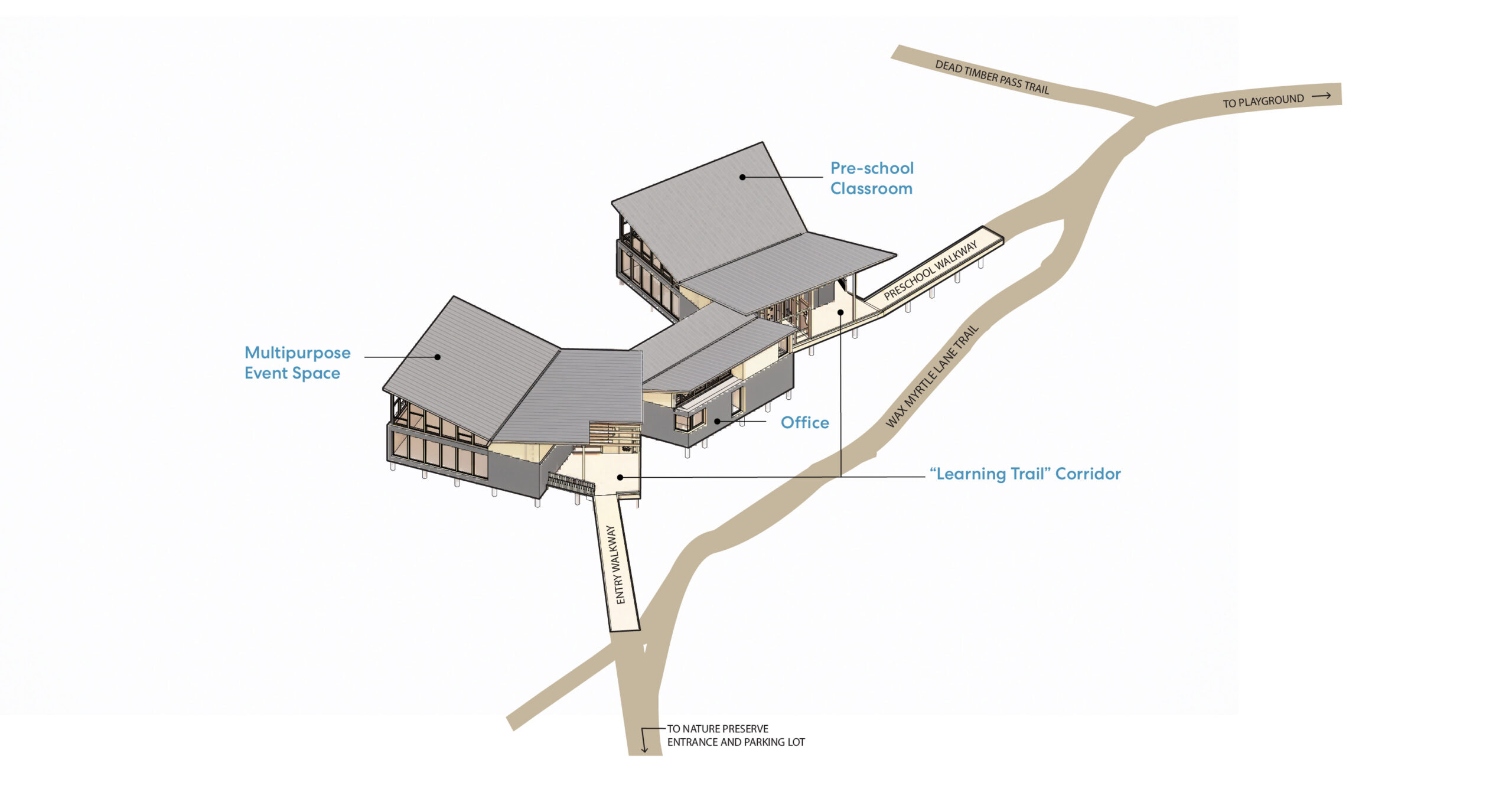
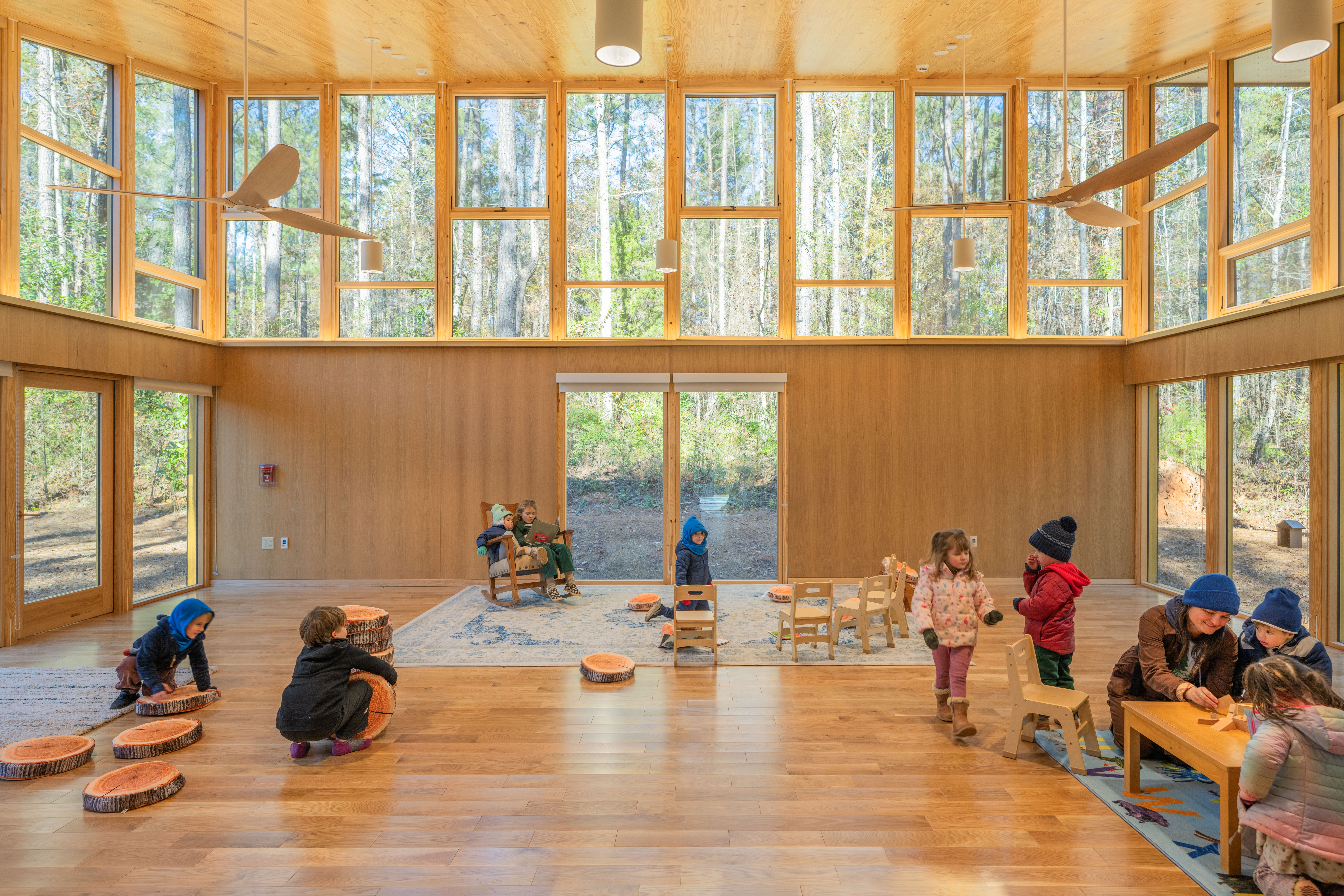
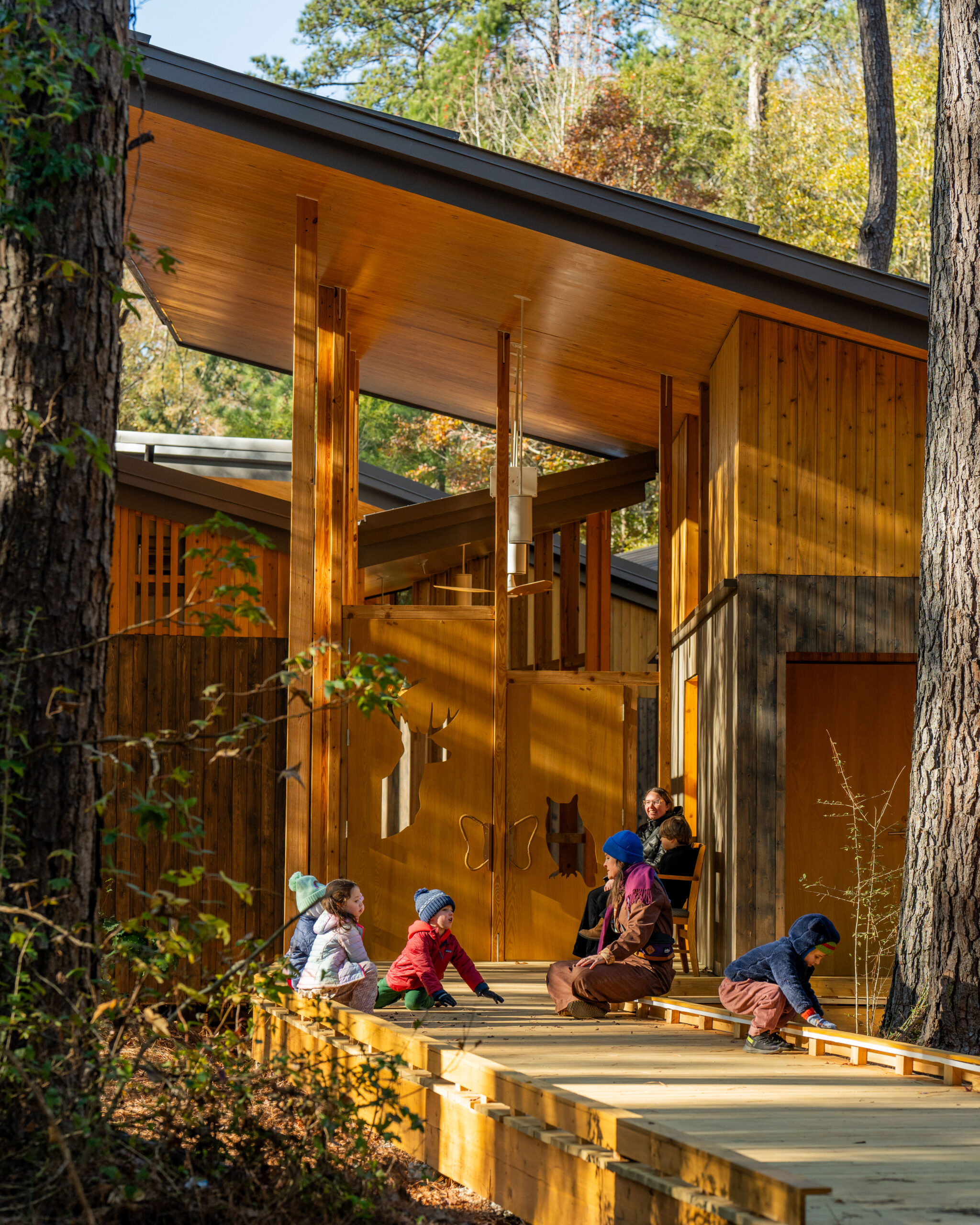
Located within the Kreher Preserve and Nature Center—a 120-acre forest managed by Auburn University’s College of Forestry, Wildlife, and Environment—and founded in 2019, the preschool is part of a growing movement that uses the natural world as a foundation for early childhood education. The architecture itself becomes part of the lesson—rising gently beneath the forest canopy and extending the network of woodland trails that are part of the daily rhythm of learning and play. “As you move through the building, you’re never forgetting where you are—there’s always daylight, fresh air, and a view of the forest,” Chung says. “The building doesn’t have a single main entry—it connects trail to trail. It’s really an extension of the preserve itself. For the children, that movement—from porch to classroom to forest—is part of the learning. The transition from outdoors to indoors and back again feels seamless, and wherever you are, you always have a view of the surrounding nature itself.”
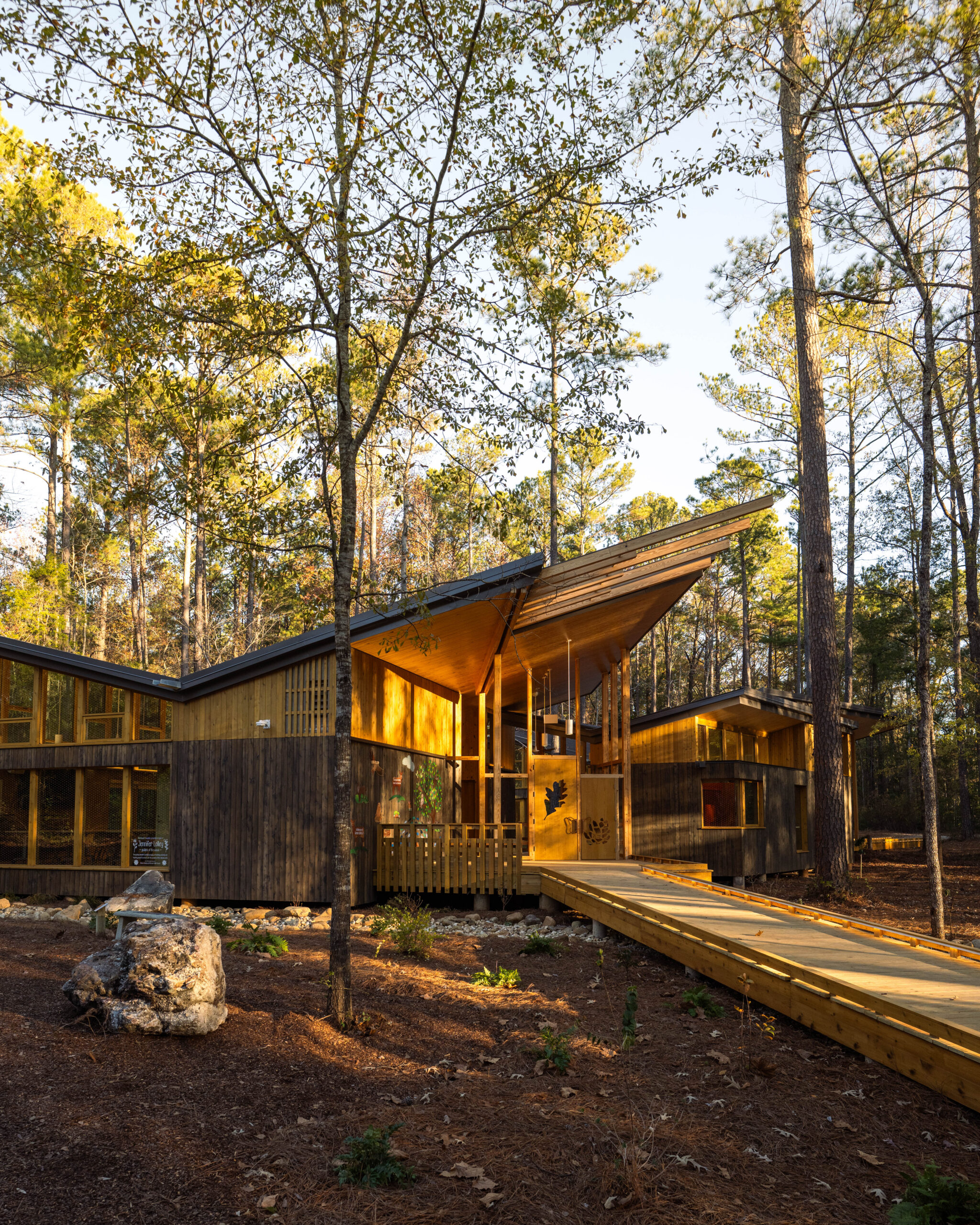
Set near the front of the preserve for easy drop-off and public visibility, the building rests gently on a flat, previously disturbed parcel—chosen to avoid encroaching on the surrounding forest. “We wanted a design that disturbed the ground the least,” Chung says. “Instead of embedding the building in a slope or pouring a slab on grade, we lifted it slightly above the site’s terrain.” Simple concrete footings and glulam beams replaced a traditional foundation, minimizing excavation and carbon-intensive materials while keeping the preschool universally accessible.
Kreher Preserve and Nature Center Environmental Education Building
Kreher Preserve and Nature Center Environmental Education Building
Kreher Preserve and Nature Center Environmental Education Building
Crafted in Locally
Sourced Wood: Architecture as Story, Place as Pedagogy
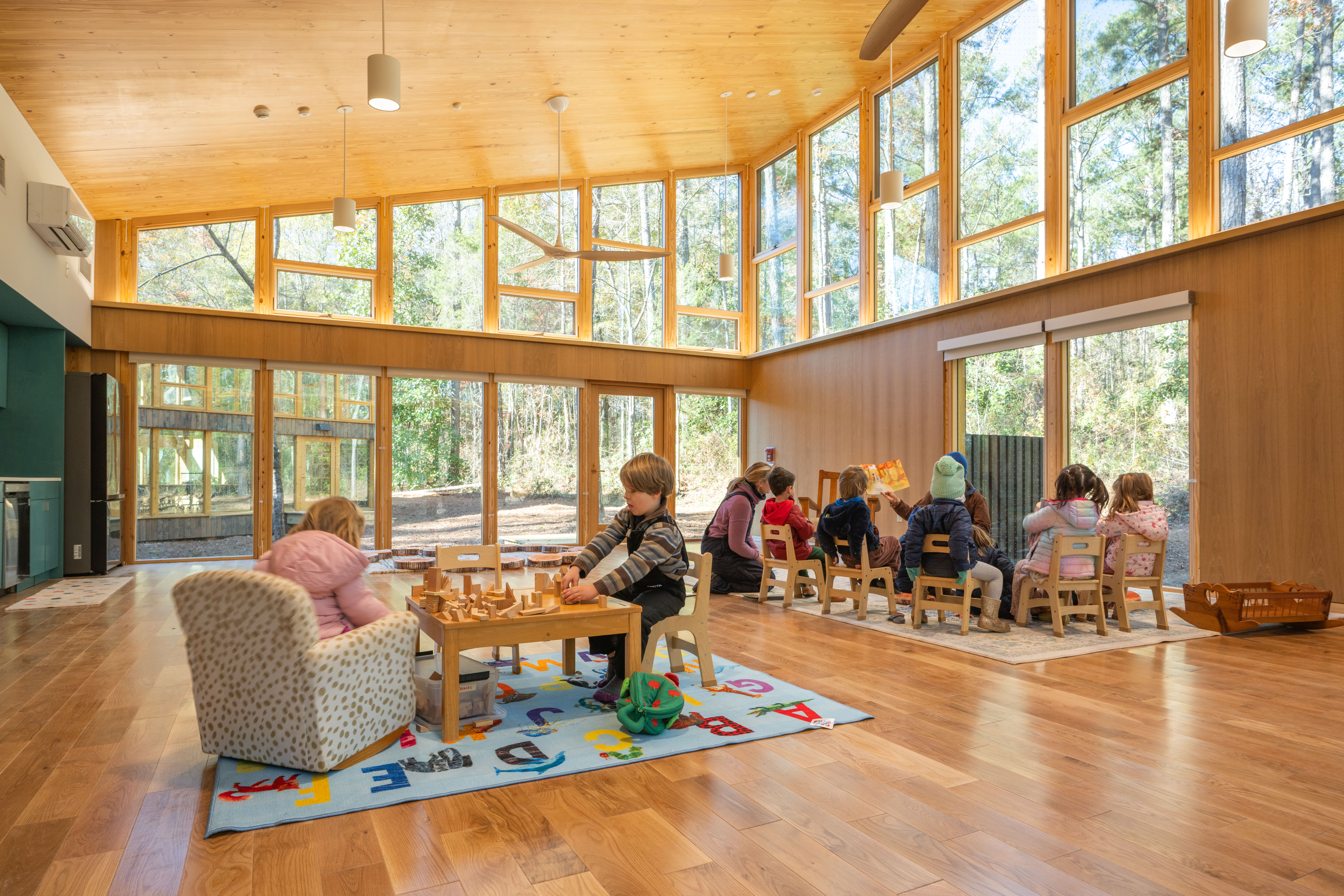
“We aimed to make everything as local as possible to minimize carbon, support the local economy, and tell a story about what can be achieved with Alabama wood products. About 95% of materials were produced in-state within 150 miles,” Chung says. The open, airy, light-filled preschool is constructed using a hybrid mass-timber and light-frame structure—glulam columns and beams for vertical and floor framing and cross-laminated timber (CLT) panels for the roof and shear walls, complemented by wood-frame infill. Standard dimensional pine lumber was used strategically in floor infill and service walls to integrate plumbing, wiring, and sinks without cluttering exposed mass timber surfaces.
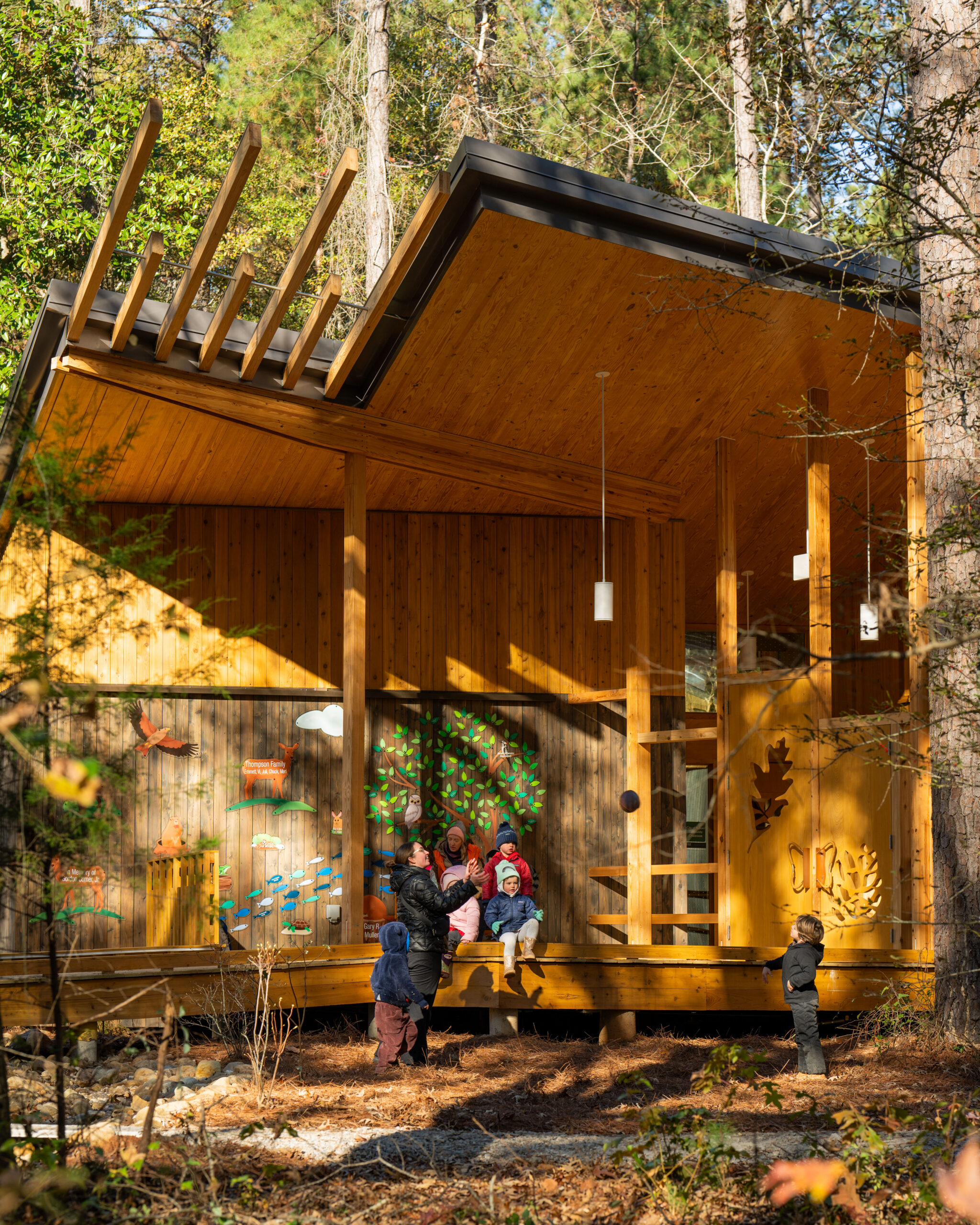
A soaring butterfly roof showcases the two-way spanning strength of CLT while subtly echoing the preserve’s logo—a butterfly symbolizing transformation and harmony with nature. Point-supported on glulam columns without intermediate beams, the twin roof planes lift toward the forest canopy, drawing in daylight and views while allowing hot air to escape through clerestory vents. The result is both practical and expressive: a form that enhances building functions while reinforcing the preschool’s nature-based learning mission. The exterior, clad in insect-resistant eastern red cedar, is finished in a two-tone stain that blends with the forest while highlighting the floating roofline. Generous overhangs and shaded porches protect the wood and expand learning spaces into the landscape.
Kreher Preserve and Nature Center Environmental Education Building
Inside, visible grain, natural finishes, and tactile woodwork reinforce sensory learning. Operable ponderosa pine windows draw in fresh air. Solid cypress entry doors come in pairs—one adult-sized, one child-sized—with butterfly-shaped wooden handles positioned at two heights and CNC wood cutouts of plants, animals, and people. Flooring and cabinetry feature locally sourced oak and cypress finishes. Along the main corridor, built-in wooden displays hold reptiles and insects housed behind glass, allowing children to observe them safely while staff can access the enclosures for care and feeding from adjoining rooms. Together, these tactile and biophilic features make the building itself part of the program’s pedagogy.
Kreher Preserve and Nature Center Environmental Education Building
A Lesson in Lightness, Levity,
and Lasting Impact
By selecting wood as its primary material, the preschool stores and avoids significant carbon emissions for a relatively small building. Carbon calculations showed 97 metric tons of carbon avoided and 150 metric tons of carbon stored for a total of 247 metric tons of carbon benefit, using the WoodWorks Carbon Calculator. Beyond its dynamic wooden form, much of the facility’s environmental performance lies in what’s unseen: Every design move—from its pier foundation and passive ventilation to bird-safe glazing—was shaped by ecological restraint. “All glazing has a bird-friendly frit—small white dots. From inside, it reads gray and is less visible; from outside, the dots are visible to birds,” Chung says. “In a nature preserve, you can’t put up a building that causes bird collisions.”
Roof scuppers direct rainwater to a bioswale for on-site filtration, a system designed to accommodate future cisterns for reuse. The butterfly roof’s operable clerestory windows, paired with operable windows below and low-energy fans, create natural cross-ventilation, reducing reliance on mechanical cooling even in Alabama’s humid climate.
Kreher Preserve and Nature Center Environmental Education Building
Prefabrication Offers Faster Construction Regardless of Experience Level
Prefabricated mass timber members saved both time and material: The components arrived at the site labeled and ready to assemble, minimizing onsite waste and impacts on the site. The prefabrication also required a methodical and pre-planned approach to assembly that closed the gap between contractor experience and speed of construction: This was the general contractor’s first time erecting a mass timber structure, and they were able to do so with just a small three-person crew and still do so roughly 50% faster than if they had been using conventional framing.
“It’s not rocket science,” Chung says. “Mass timber can go together like a kit if you’re smart about it.”
For Chung, the takeaways from the Kreher Preserve and Nature Center Environmental Education Building are scalable: “By using local materials and a hybrid timber system, even small projects can deliver a big environmental impact—and teach what sustainable design looks like in practice.”
Kreher Preserve and Nature Center Environmental Education Building
Project Details
- Project Name:
- Kreher Preserve and Nature Center Environmental Education Building
- Location:
- Auburn, AL
- Architect:
- Owner:
- Auburn University
- Structural Engineer:
- General Contractor:
- W.W. Compton
- Mass Timber Fabricator/Supplier:
- Size:
- 3,000 square feet
- Timber Products:
- Photo Credit:
- C. W. Newell