Civic Community, Multifamily
Wood Helps a Domestic Violence Shelter Become a Beacon for Safety
Haven Domestic Violence Shelter
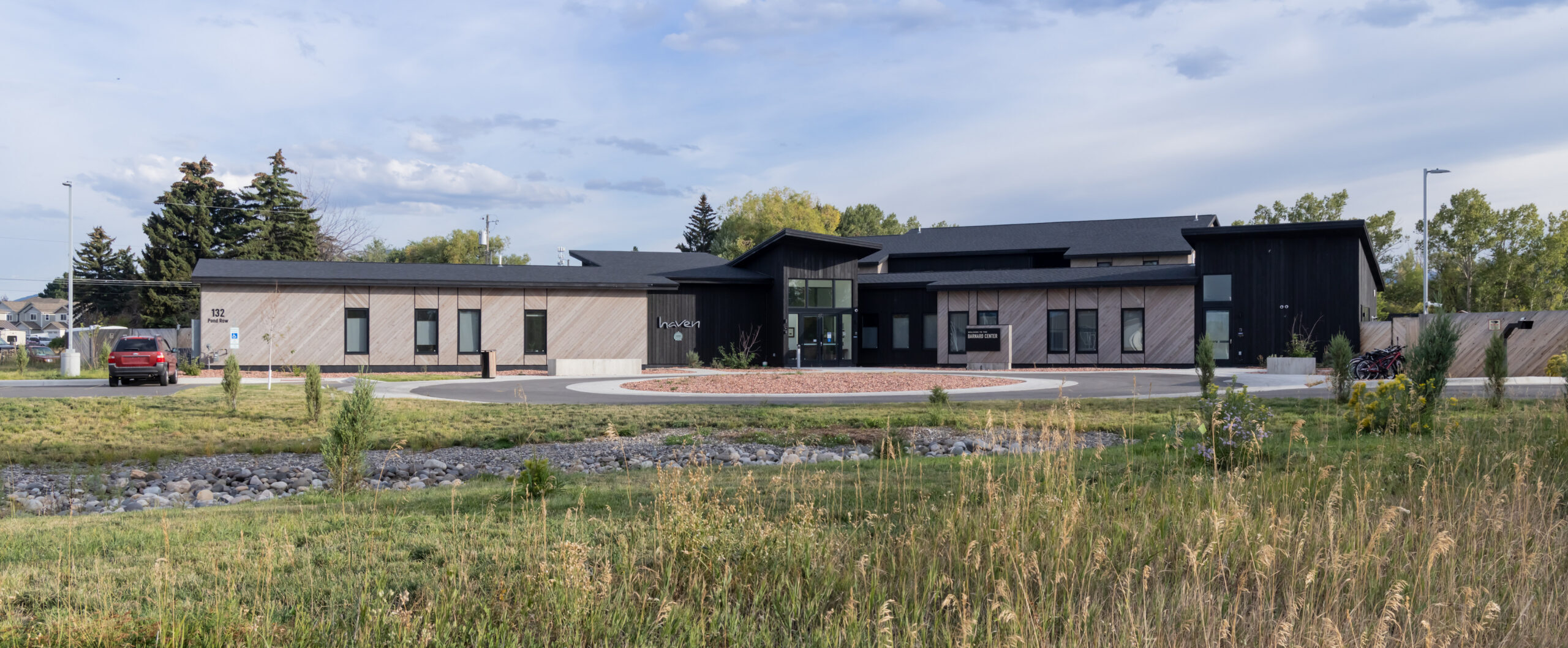
Haven, a domestic violence shelter in Bozeman, Montana, was established in 1979, but recently completed its first purpose-built facility. The 11,194-square-foot facility, designed by Boston and Kigali, Rwanda-based MASS, comprises a 30-bedroom shelter and a series of public-facing spaces that foster education, dialogue, and support. In its first year alone, the new facility served an estimated 1,400 survivors, showing the critical need for supportive services for those escaping domestic abuse.
Previously, Haven delivered services in an undisclosed location chosen to provide safety and privacy for survivors. But when it came time to design a new space, “Haven conducted a community listening process that asked what else they could be doing to give visibility to domestic violence as a systemic problem in their community and nationwide,” MASS Director Alejandra Cervantes Enríquez says. “In these sessions, they heard that domestic violence is a community issue, so it shouldn’t be something that remains hidden or taboo.” MASS’s design charge was to give Haven more visibility to draw attention to its cause, even as the facility had to be secure, healing, and nurturing for survivors. “We’re all accountable as a community to support survivors,” Cervantes Enríquez explains, “and in making the change we want to see.”
Haven Domestic Violence Shelter
Haven Domestic Violence Shelter
Integrating Trauma-Informed Design Principles
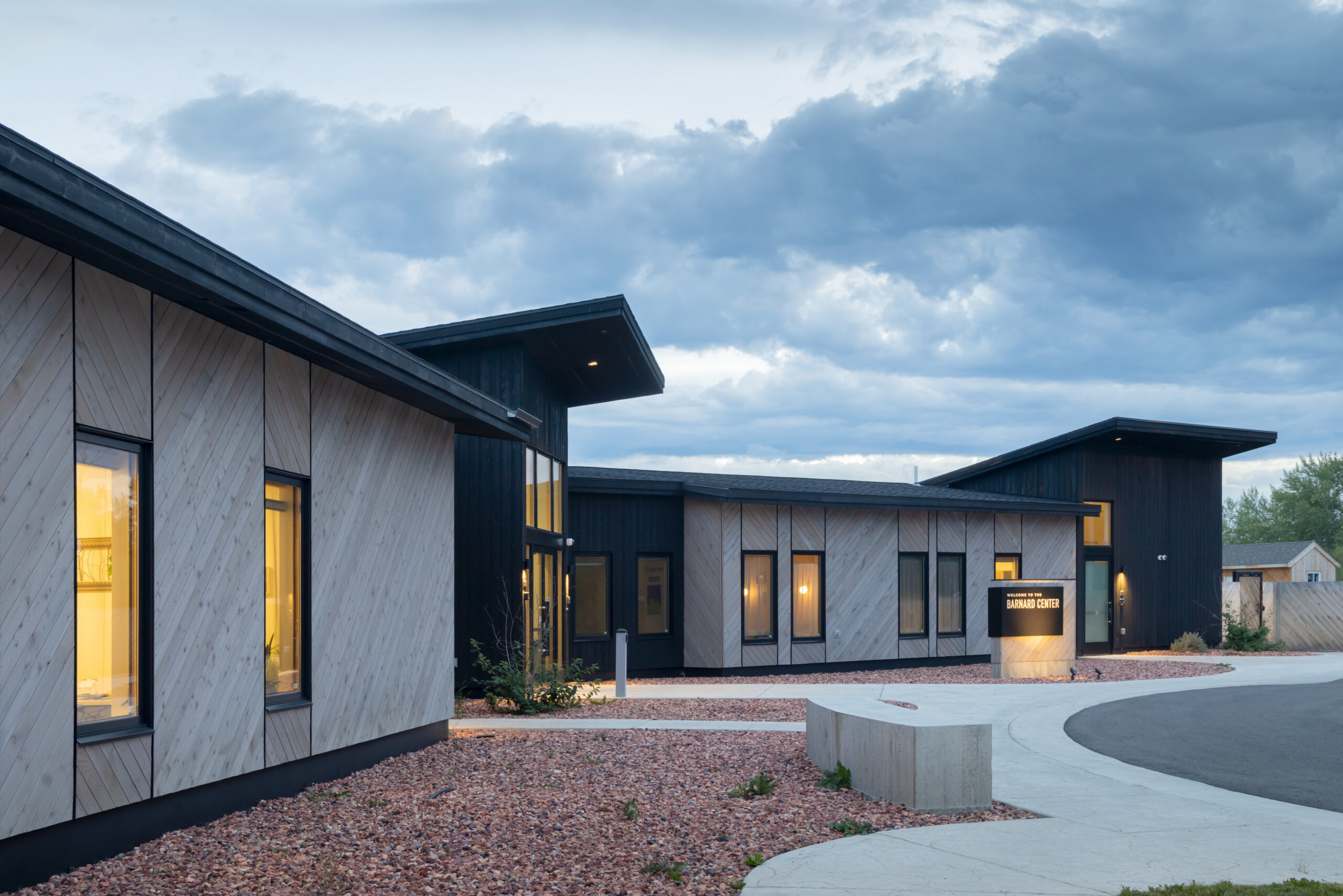
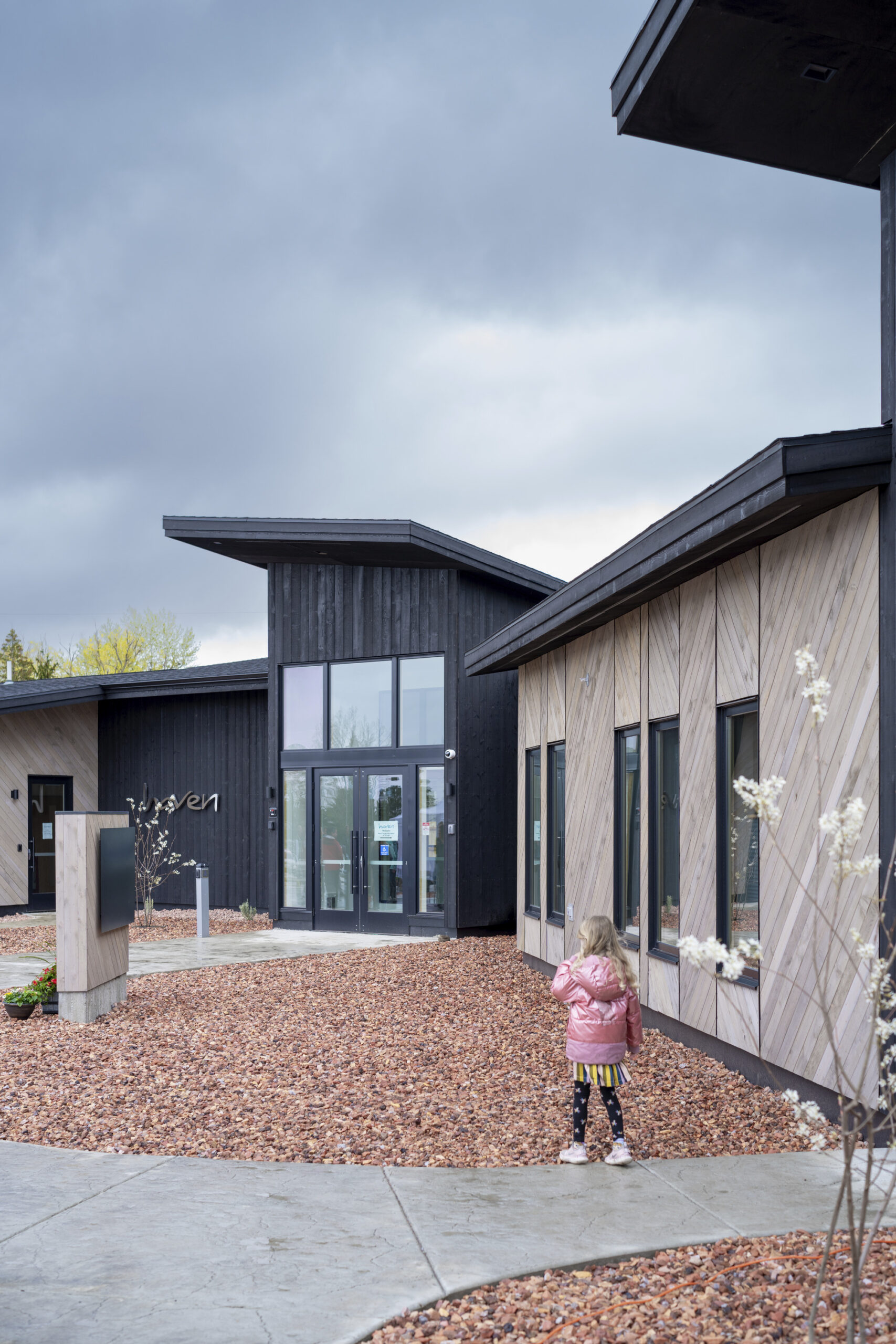
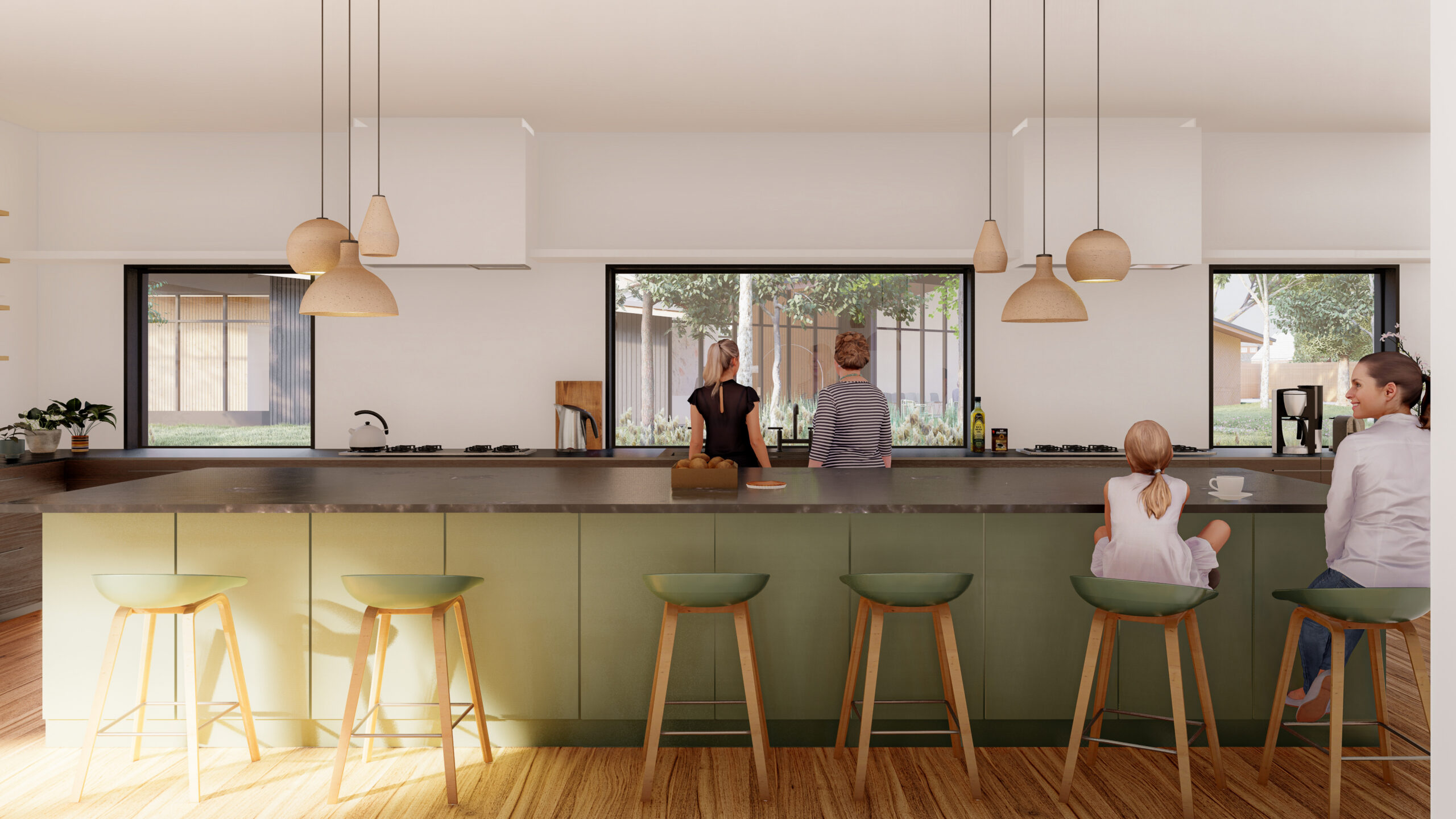
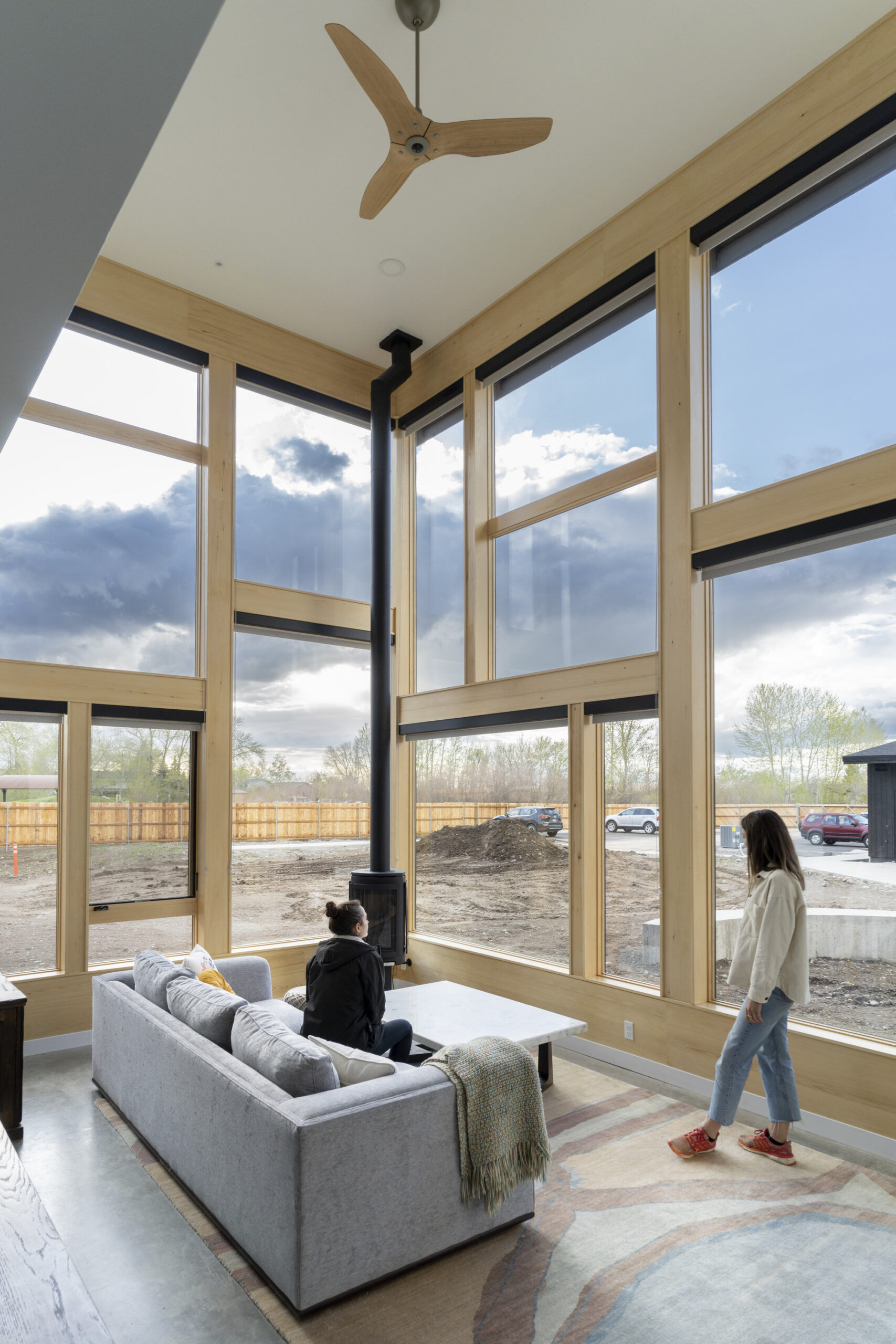
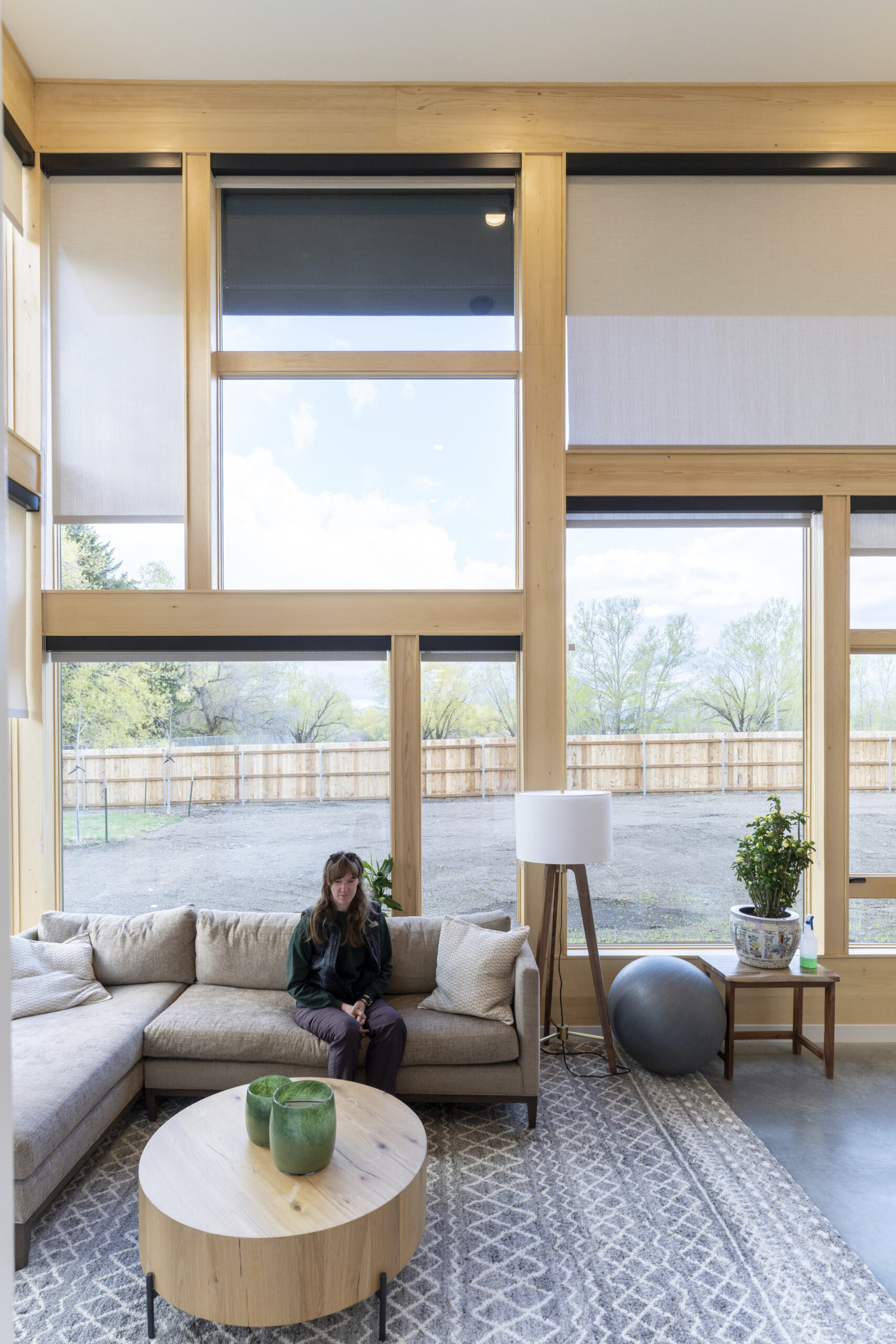
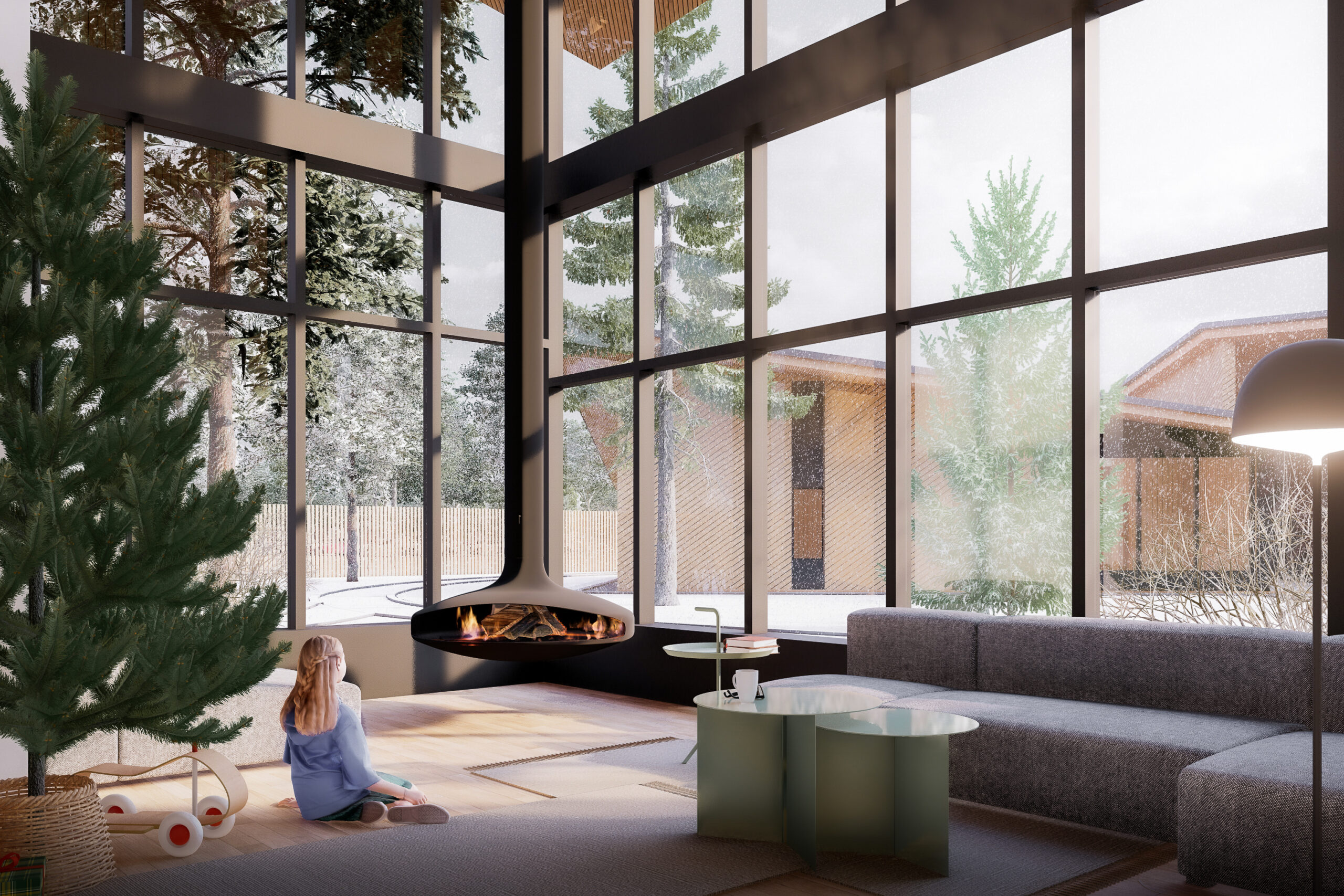
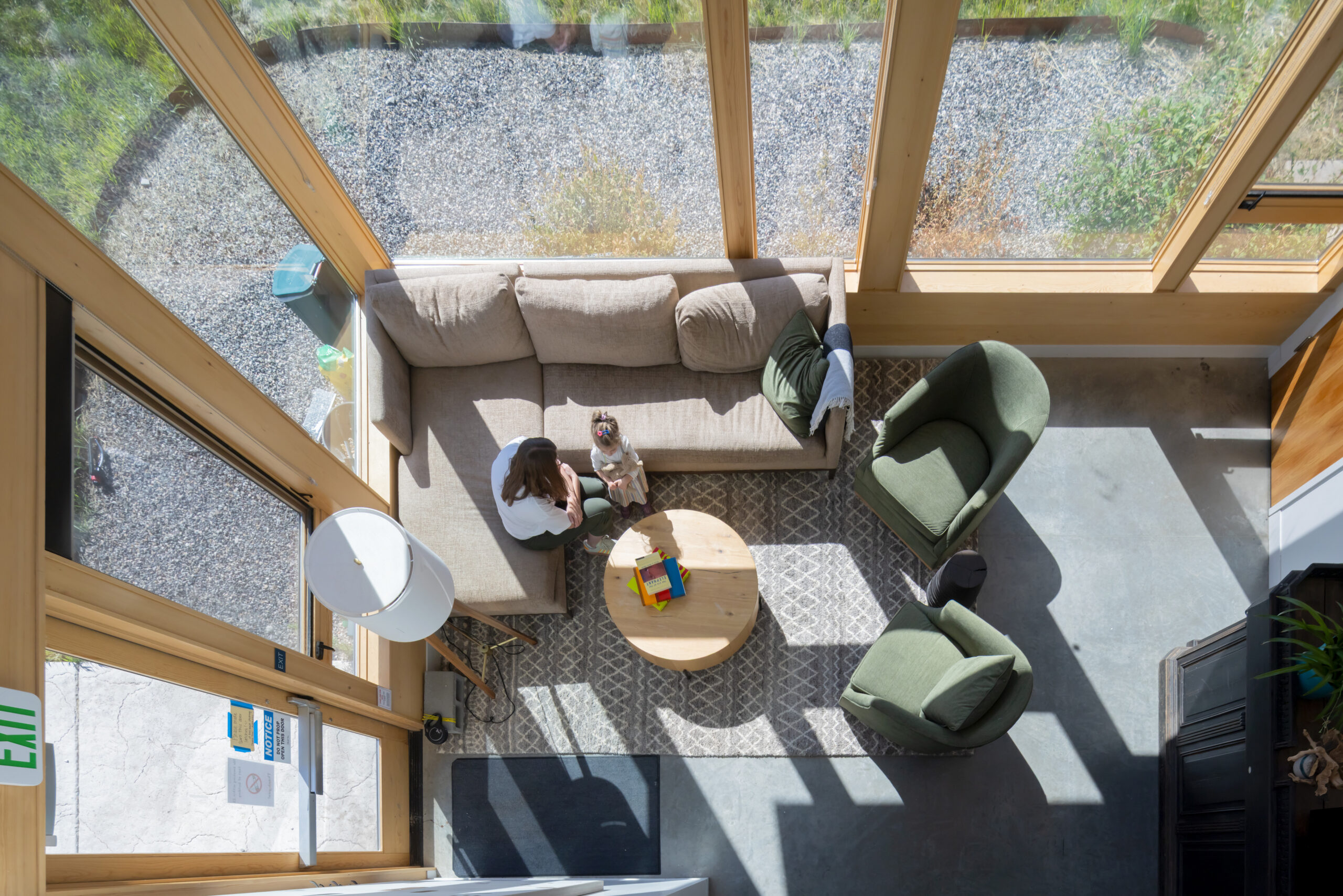
To strike a balance, MASS turned to the principles of trauma-informed design (TID), a school of design thinking that strives to create environments that can provide safety, empowerment, and healing for those who have experienced trauma. While TID is rapidly evolving as more organizations and design firms embrace its ideas, MASS incorporated five of its core principles into the design for Haven: safety, trust, choice, collaboration, and empowerment. “The material strategies were a major TID strategy,” MASS Director of Engineering and Performance & Provenance James Kitchin says. Creating connections to nature, diffuse lighting, and avoiding institutional-feeling materials are seen as major factors in creating calm, supportive TID-informed spaces. “Wood was critical to create a sense of warmth and a residential feel,” Cervantes Enríquez adds.
Haven Domestic Violence Shelter
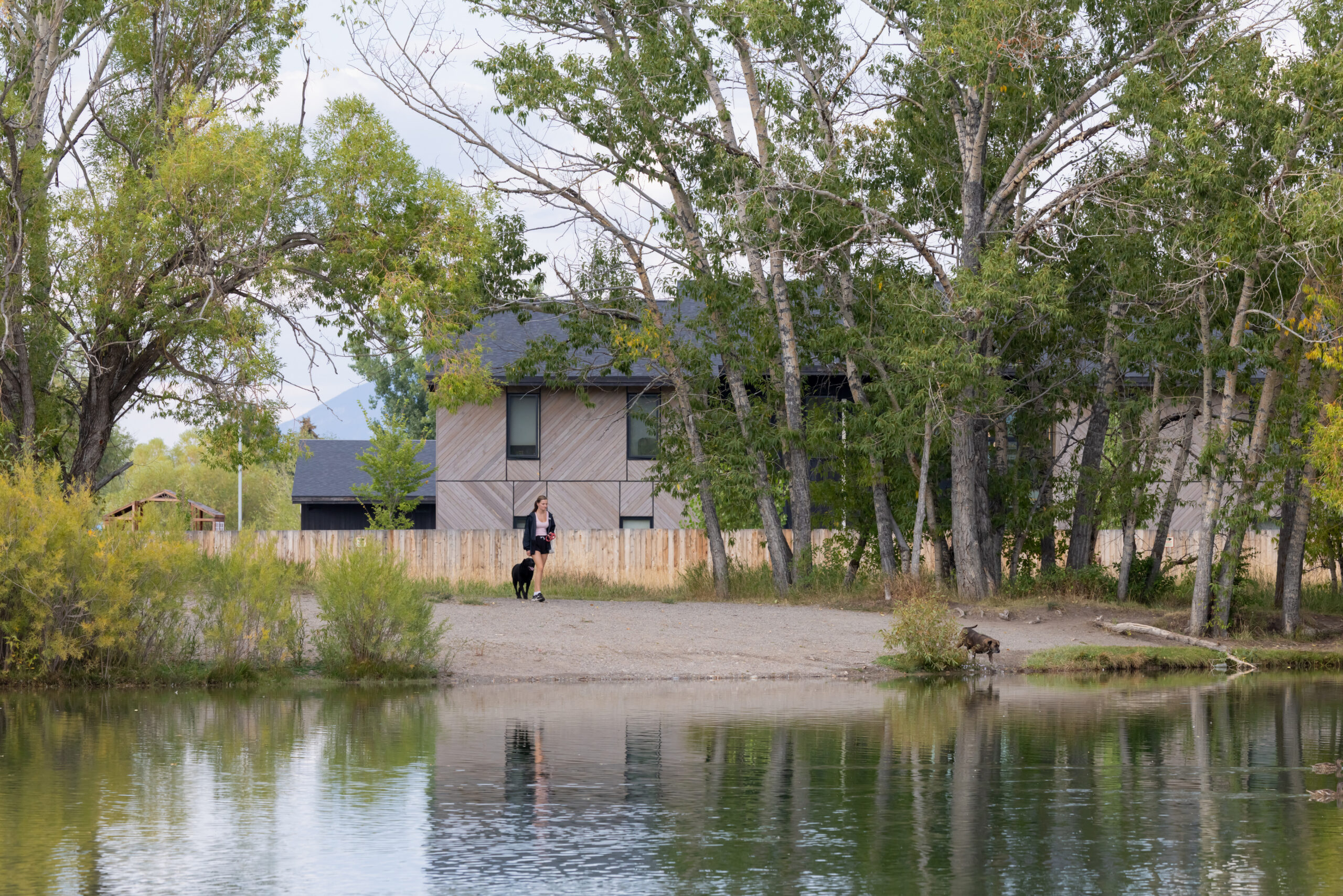
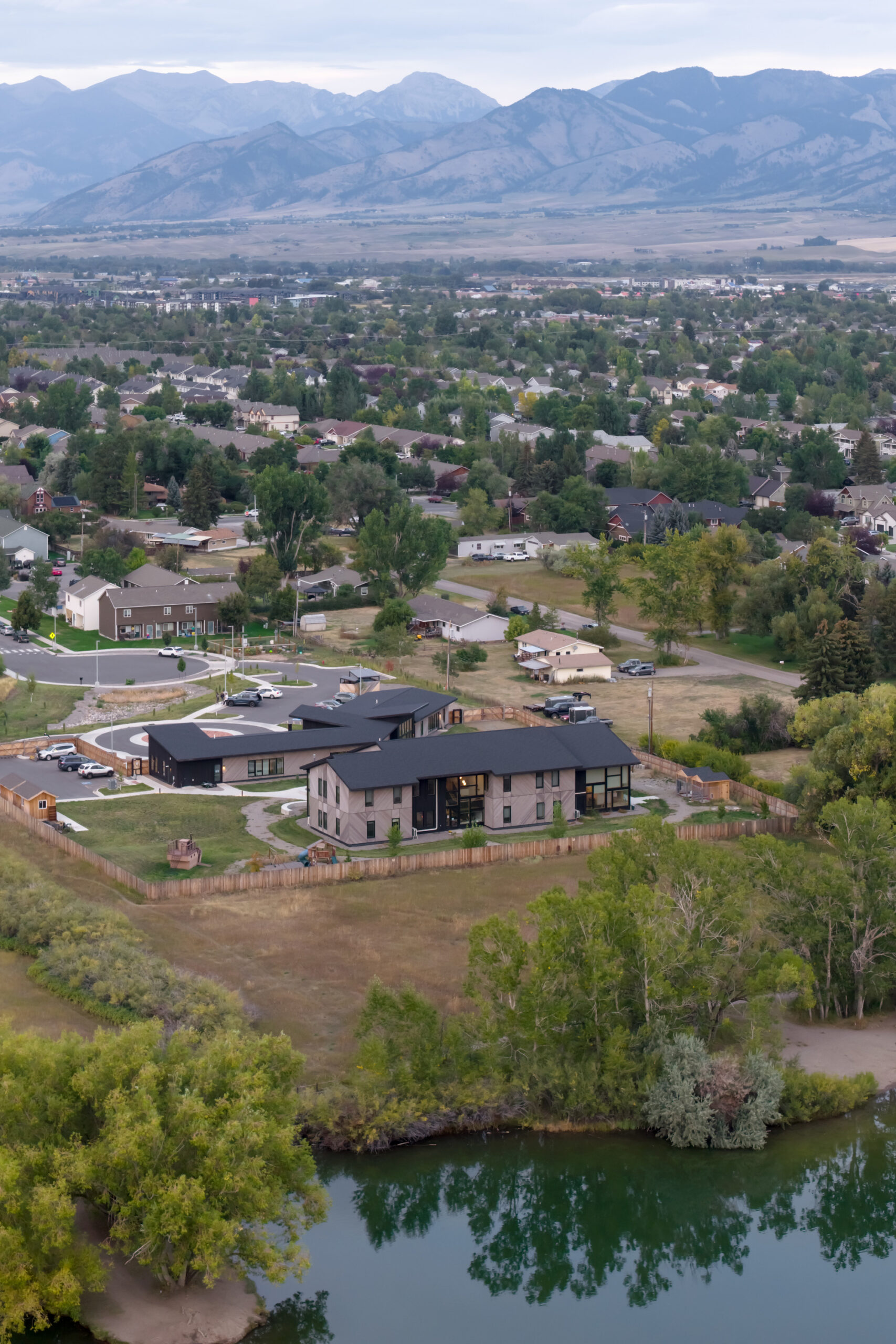
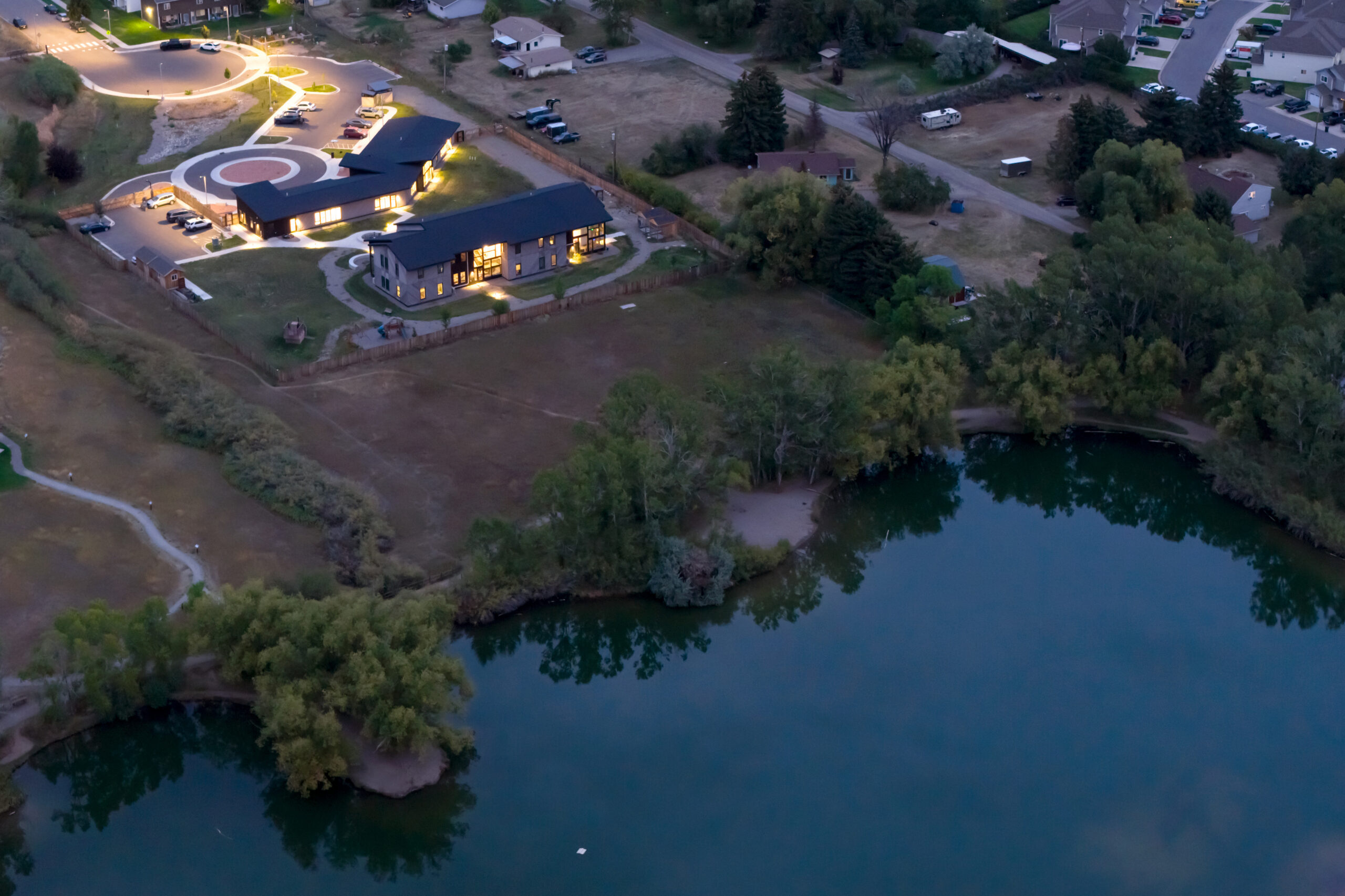
The three-acre site of Haven’s new facility is located two miles west of downtown Bozeman. It overlooks Bozeman Pond at the end of a cul-de-sac in a residential neighborhood. The landscape offers walking paths, quiet seating areas, and spaces for play and healing. But since security is still paramount, it was necessary for a fence to line the property. MASS chose a cedar fence for its aesthetic qualities. “If you were to swap that wood fence with wire or any metal structure, it would communicate very differently,” Cervantes Enríquez says.
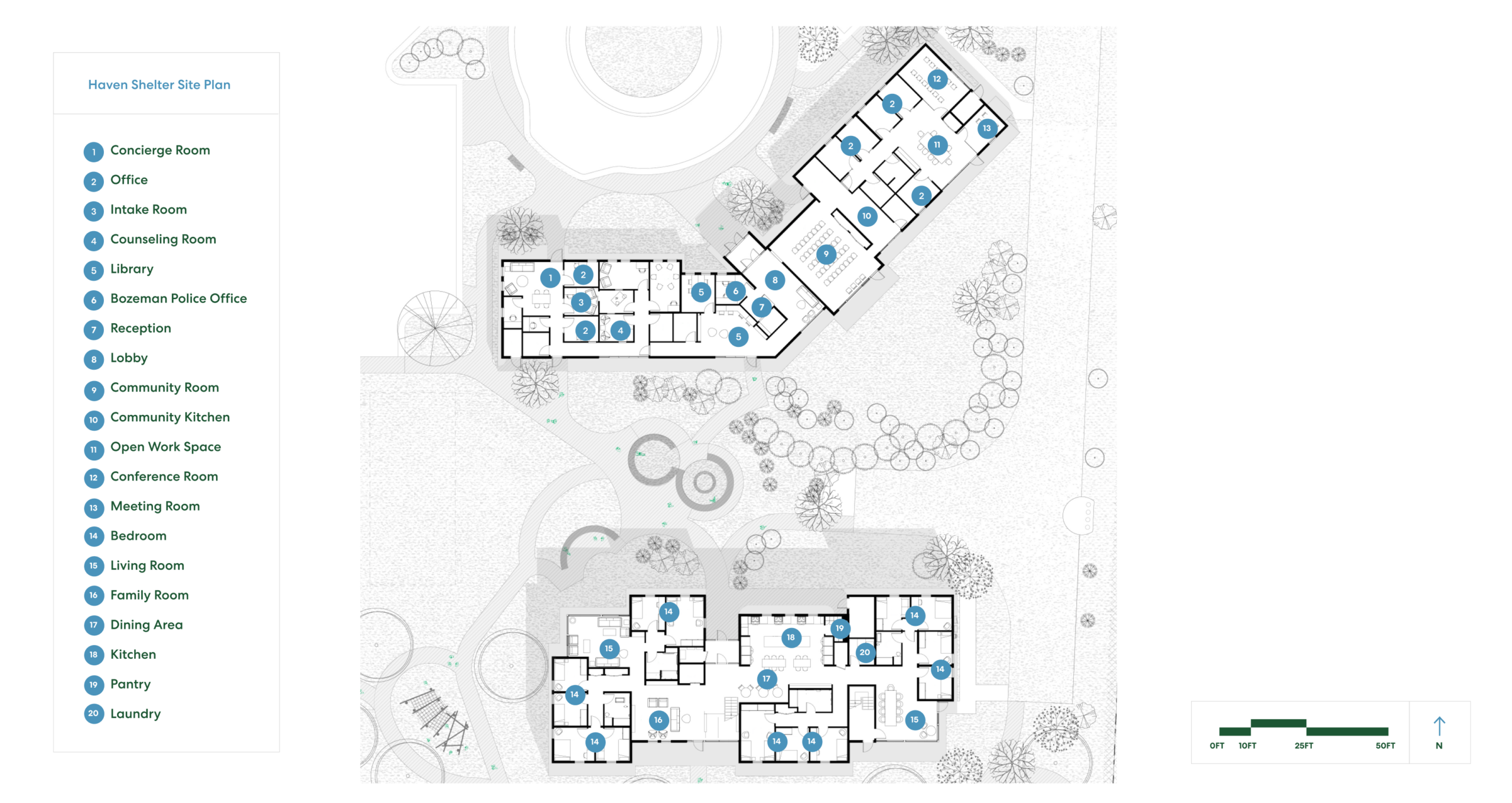
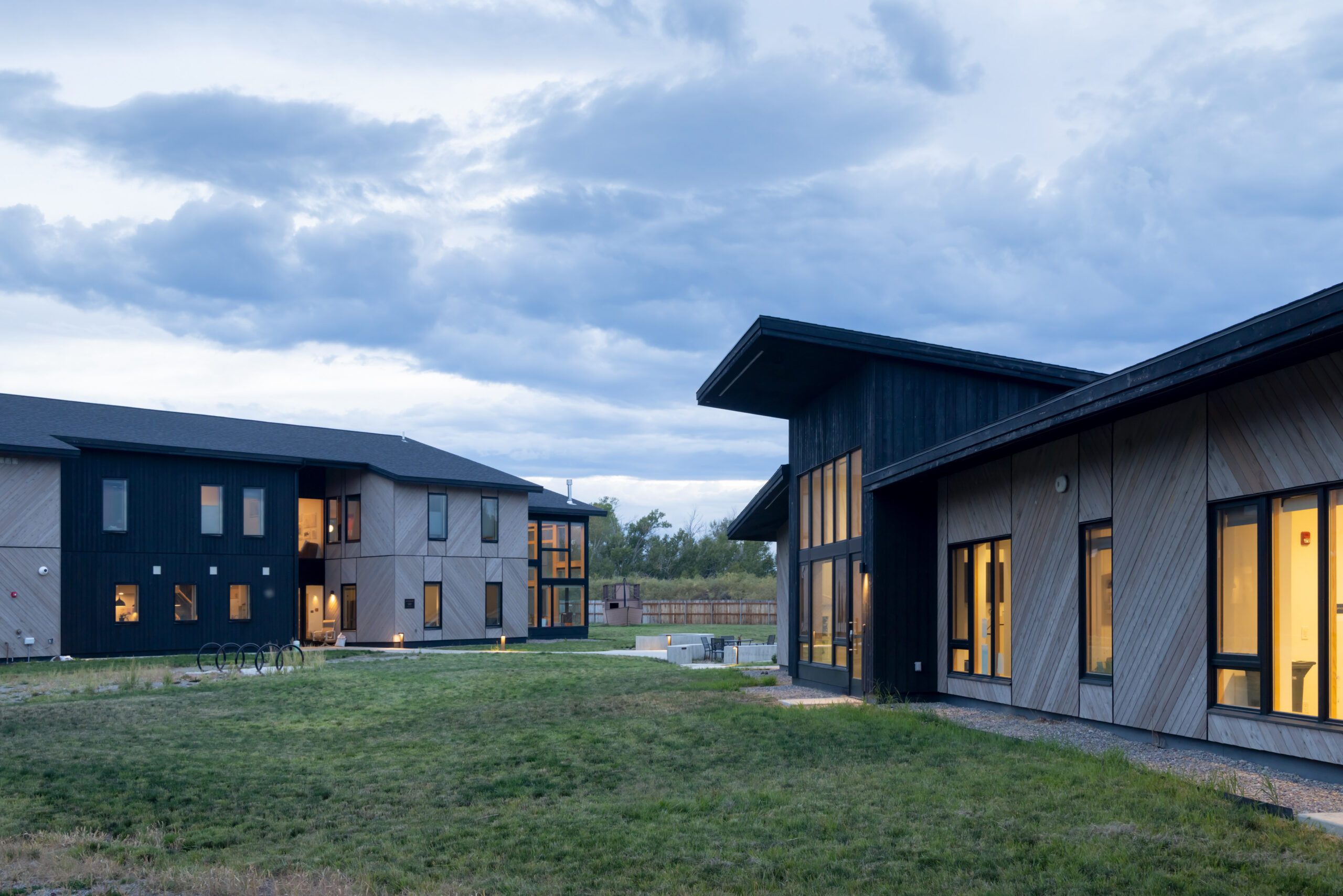
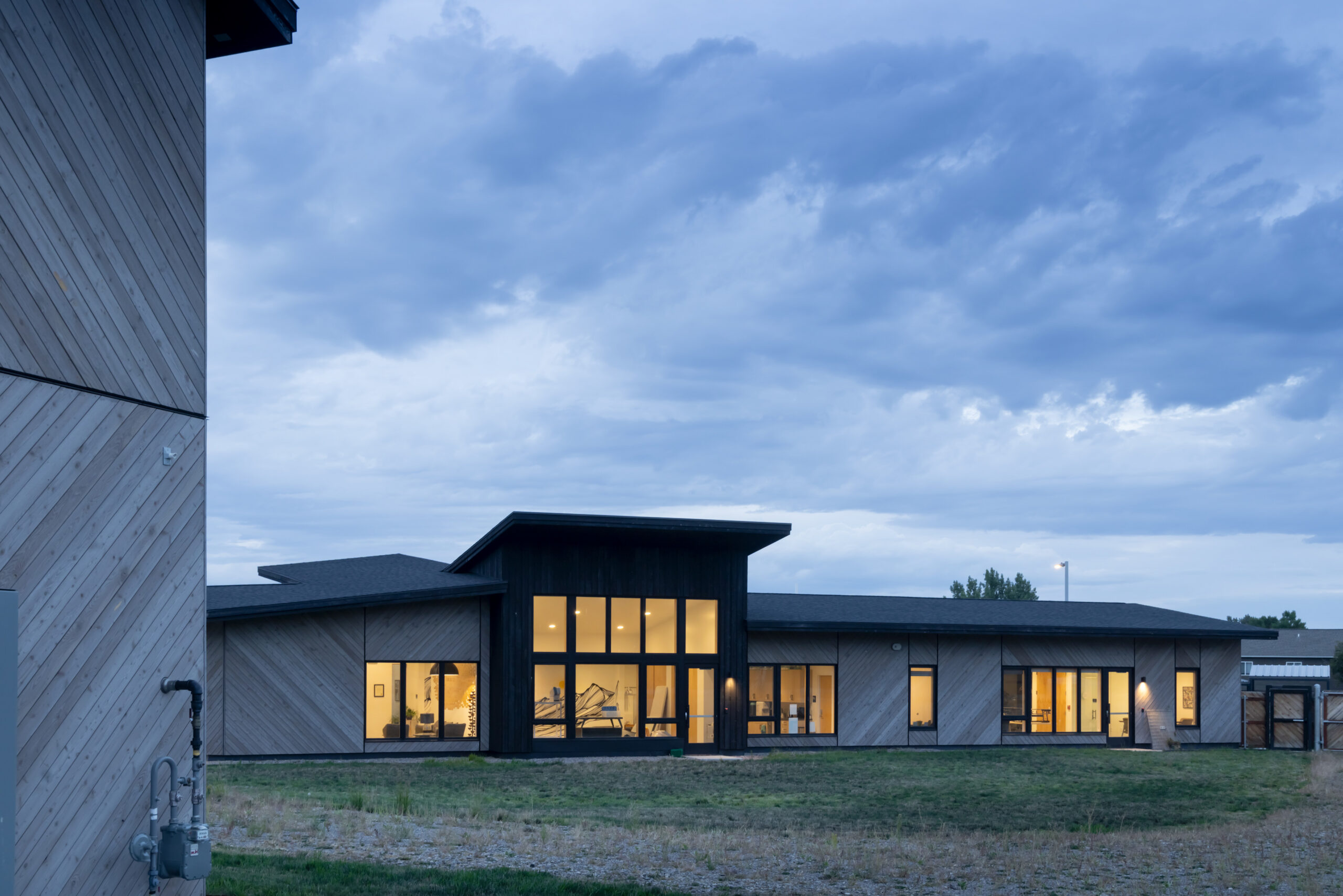
The designers split the program into two separate structures: A single-story front-facing building accommodates a library, counseling rooms, community gathering spaces, and administrative offices; the two-story shelter—where residents stay—sits to its rear.
Haven Domestic Violence Shelter
Haven Domestic Violence Shelter
Light-Frame Construction That Feels Like Home
Conventional wood-frame construction is used throughout the complex. The team evaluated steel alongside wood and found that conventional light-frame wood construction met budget requirements while also reducing embodied carbon. “We were keen to use wood because it is a natural material and to reduce the embodied carbon of the structure,” Kitchin says. He describes the structure as typical residential construction that incorporates gang-nail trusses of different shapes and forms.
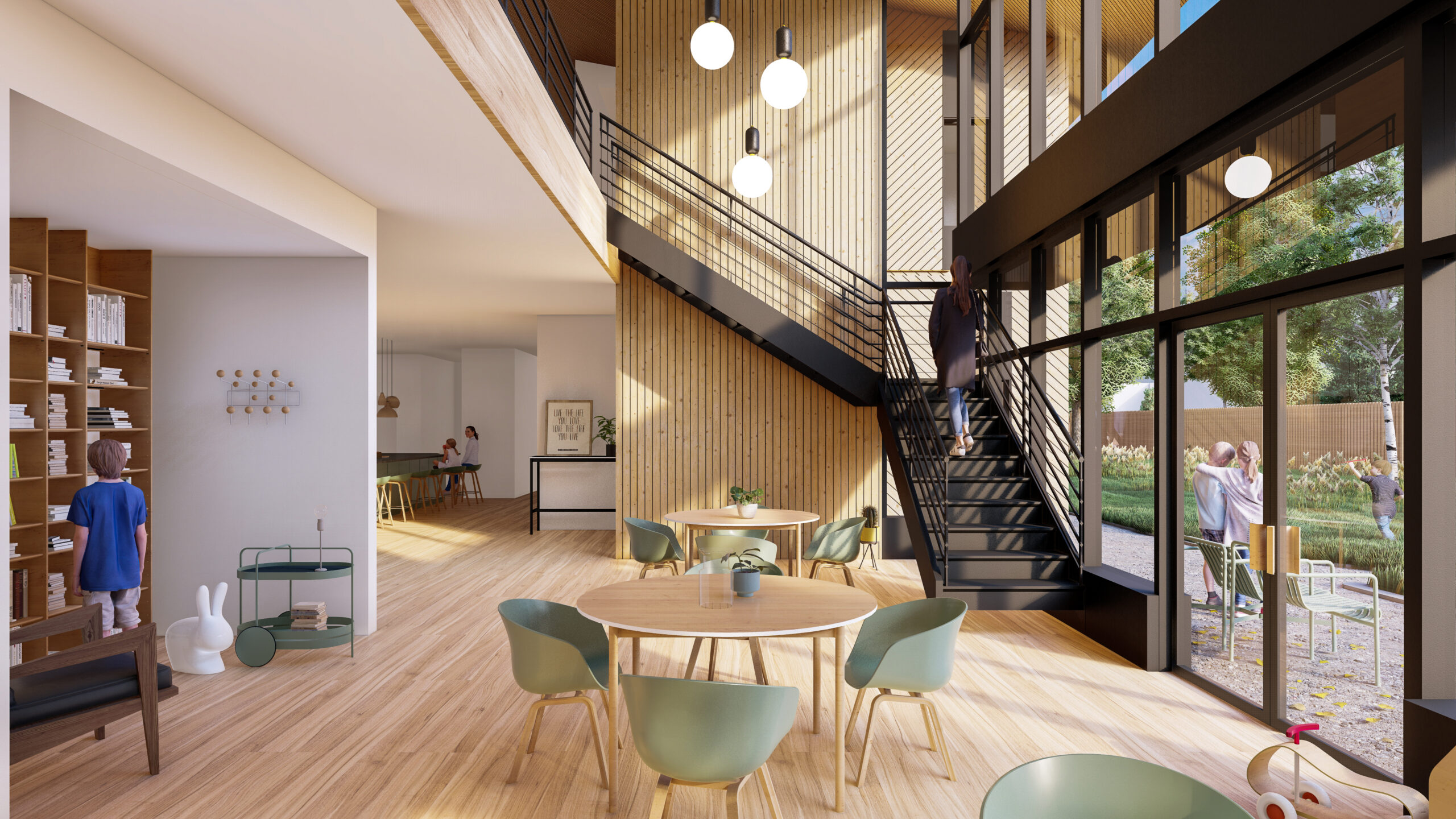
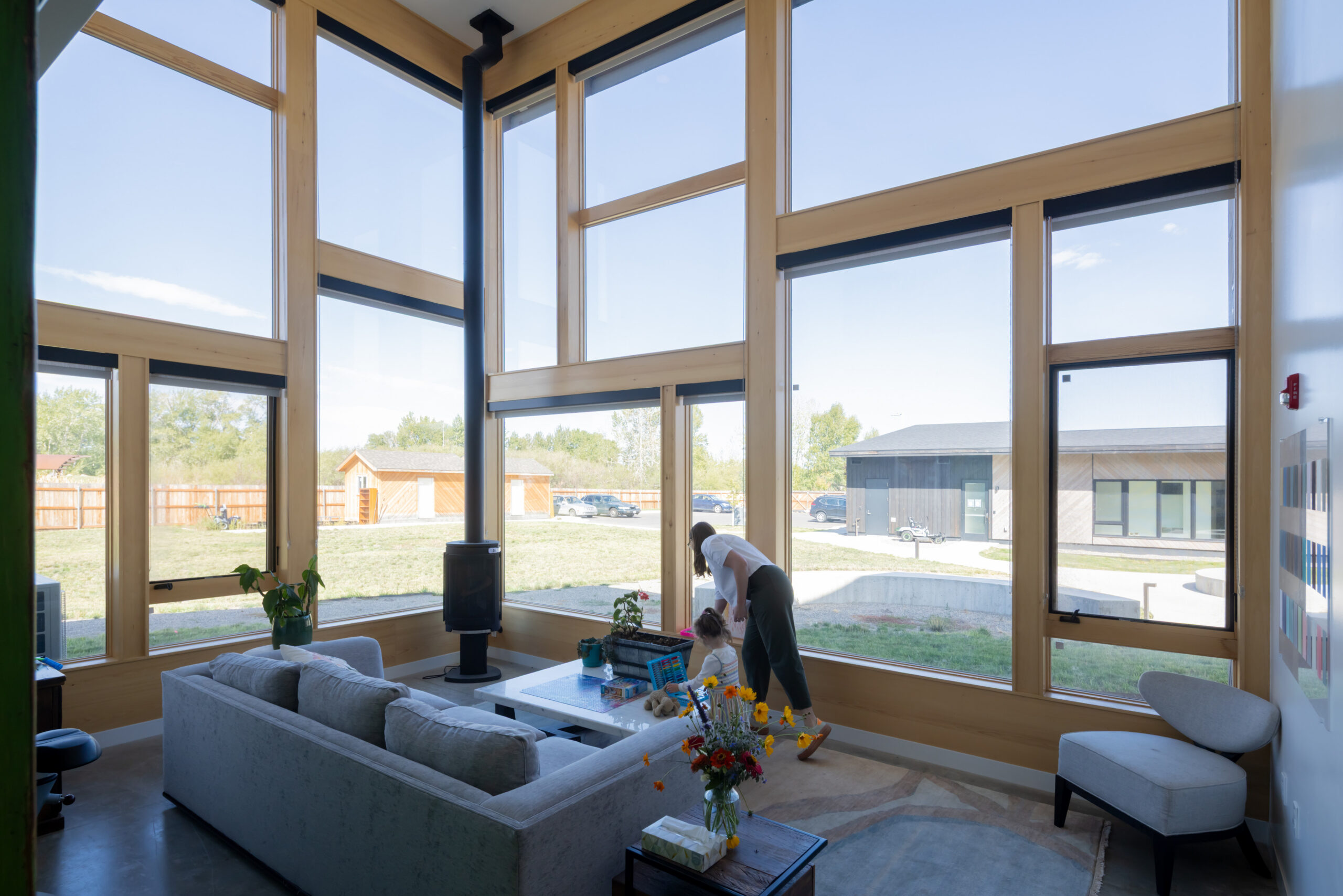
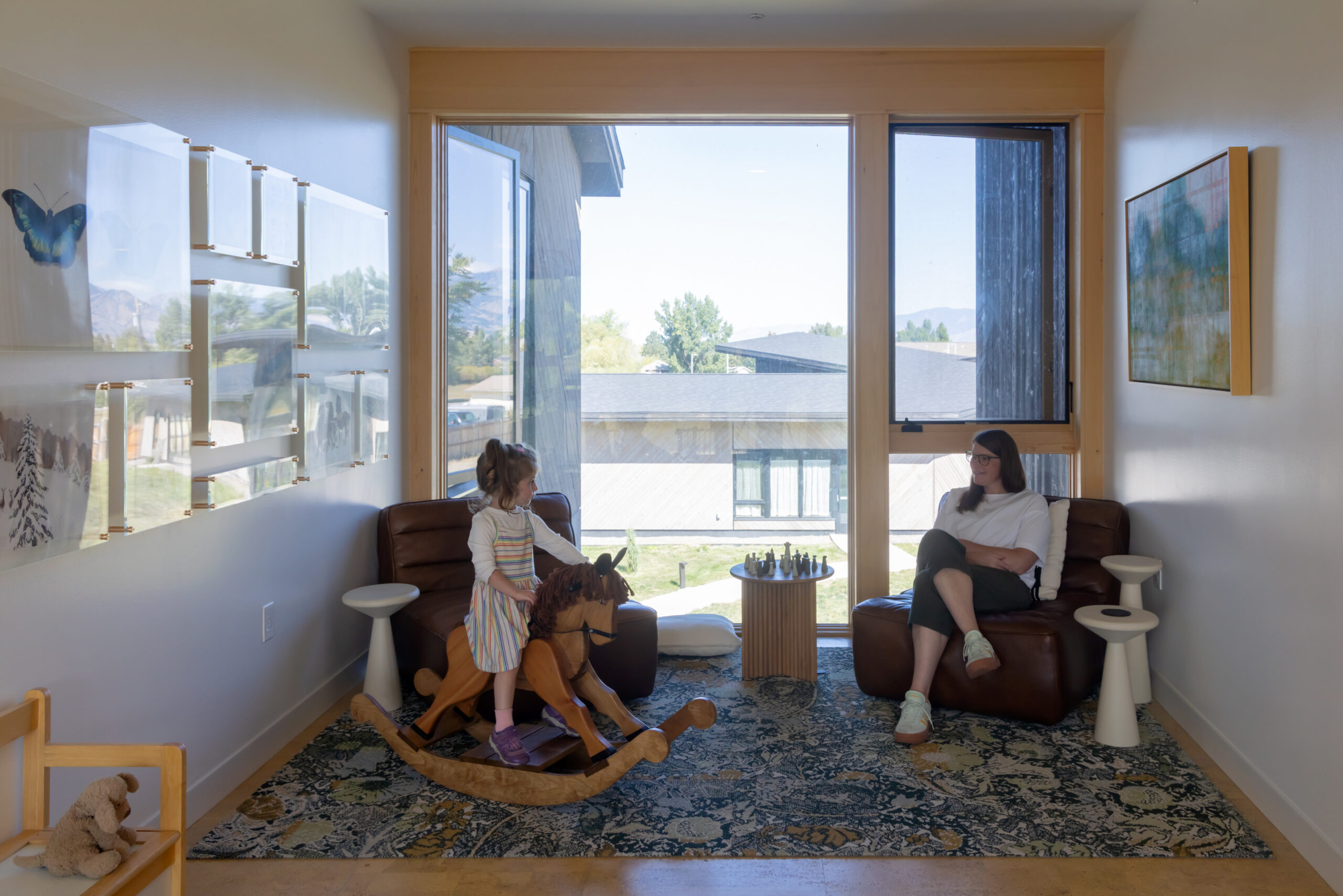
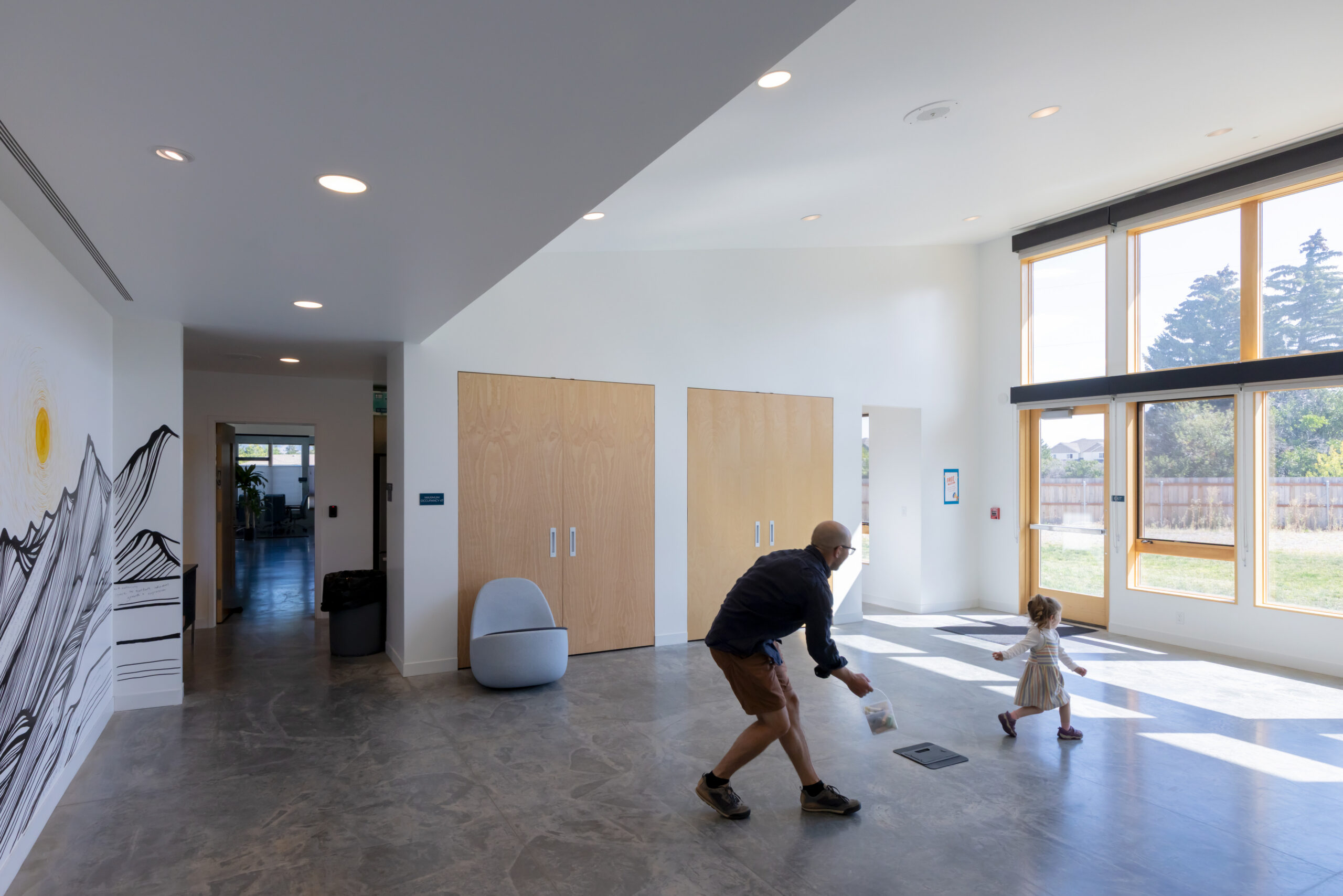
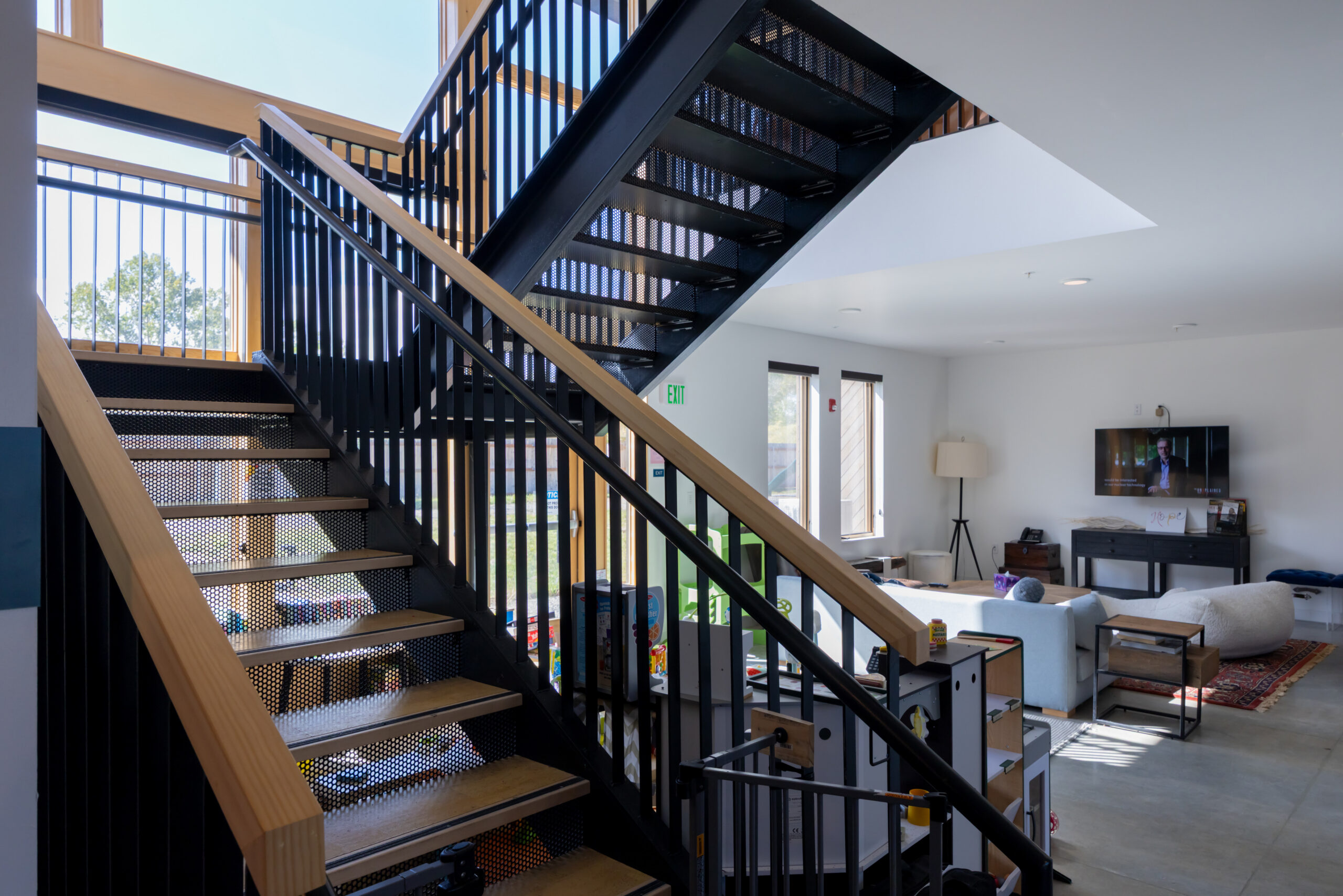
MASS leans into the residential look and feel throughout the main structure with wood windows throughout, wood flooring in select common areas, and stairs with wood treads and railings. Simple white-painted walls predominate with natural wood finishes and warm colors for accents. The residential building is configured with clustered pods of bedrooms organized around shared open living spaces. “Some of the two-bedroom [units] at the end of some clusters can make a larger suite to accommodate different family compositions,” Cervantes Enríquez says. “Those suites offer added privacy and flexibility.”
Haven Domestic Violence Shelter
Flexibility is key, with the residential spaces offering what the designers call an ecosystem of choice for where residents can spend their time throughout the day. “[The building] is low enough that you feel it’s not this big institution”, Cervantes Enríquez says—a distinction that is important in TID to ensure that residents feel safe and secure during their recovery. “It’s house scale, albeit a little bit larger.”
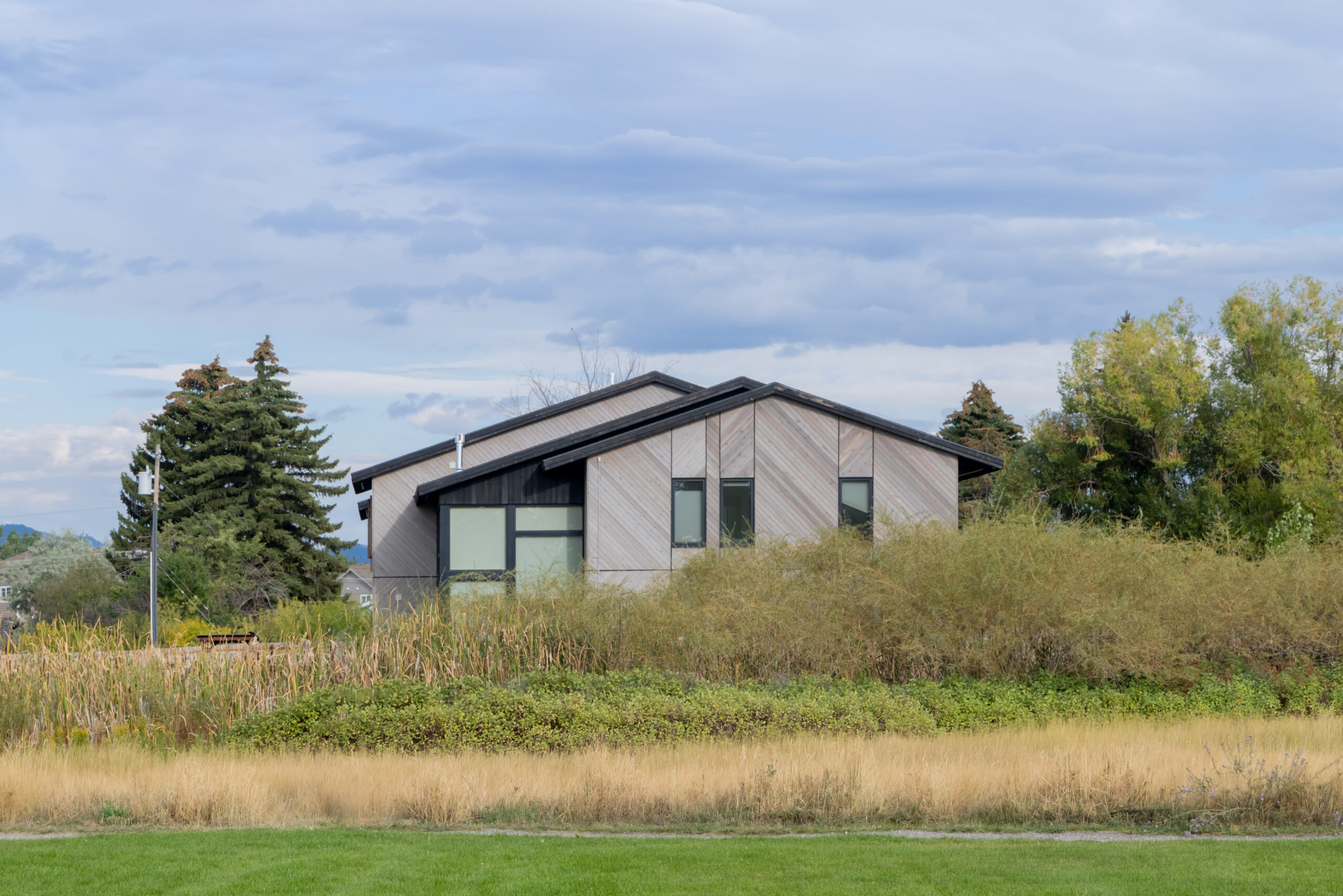
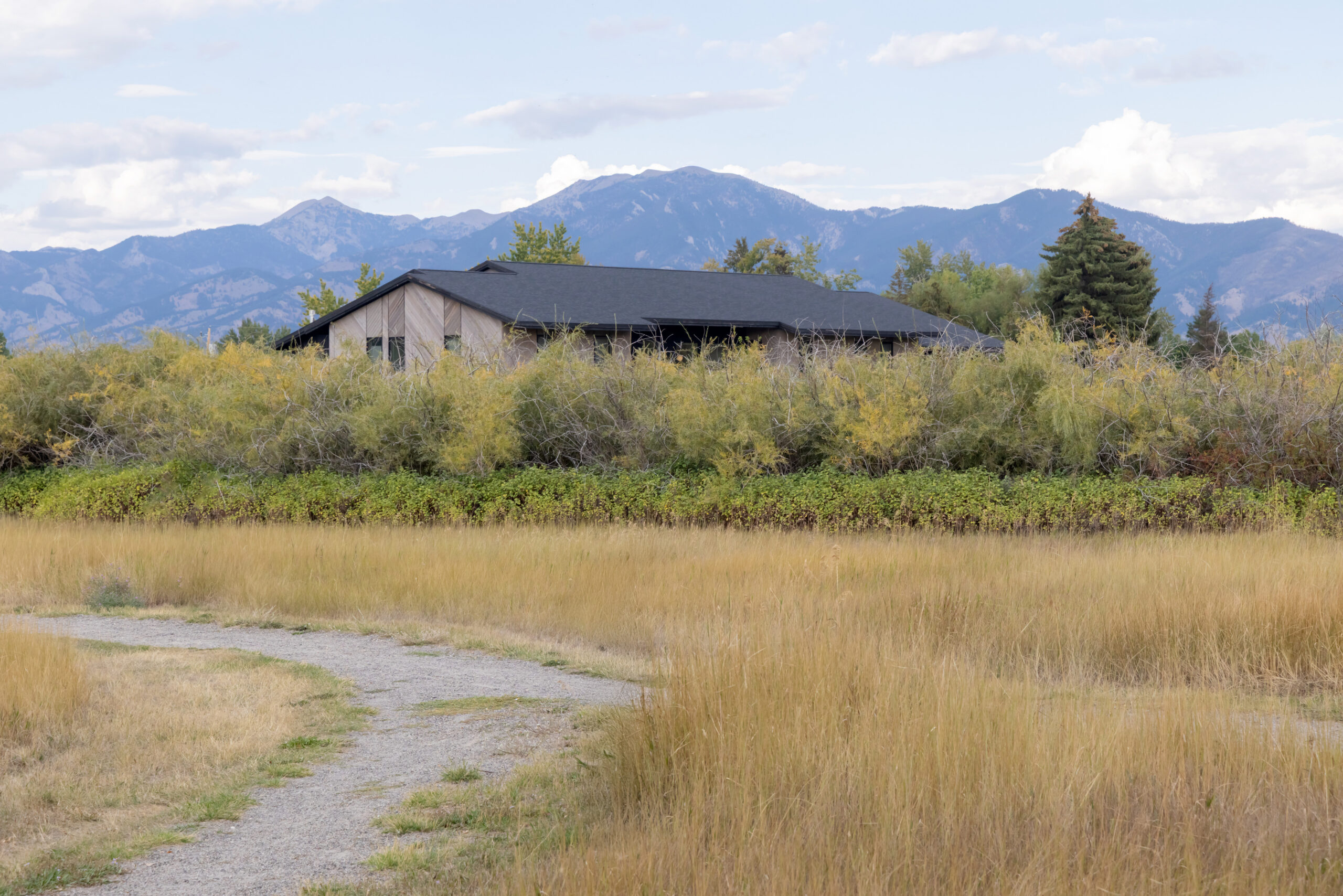
The wood exterior, featuring a pattern of diagonal boards, is another important factor in creating Haven’s residential feel. “We were always of the view that we would be using wood because of its nice, warm, natural aesthetics, as well as being in Montana, which is a highly forested part of the world,” Kitchin says. The exteriors of both buildings are clad in locally sourced Douglas fir siding finished with two different stains. “It’s a relatively cheap cladding material, but done in a diagonal pattern,” Kitchin says. “It’s a typical material that’s implemented in an aesthetically pleasing way.” He notes that the design would have been more economical with cement board in lieu of wood cladding, and PVC windows rather than wood. But “[the clients were] invested in TID principles and recognized how wood contributes,” he says.
Haven Domestic Violence Shelter
Haven Domestic Violence Shelter
Innovative Design With Standard Wood Construction
MASS (which stands for Model of Architecture Serving Society) is not your typical architecture firm. “We have a unique model of working,” Kitchin says. “We can invest in network building without having to see a direct financial return on investment because we’re a nonprofit.” As such, it has some unusual tools at its disposal, including its Bio-Based Materials Collective—a network MASS co-founded to help scale up the use of plant-based materials. The data collected by this group helped inform the design of Haven, where TID’s premium on natural materials was integral.
Kitchin is also director of MASS’s Abundant Futures Lab, one of eight groups within the firm that inform its design work. “The design labs push the boundaries of research, project delivery, and systemic change in certain areas,” Kitchin says. “The Abundant Futures Design Lab is focused on climate and nature solutions.”
By bringing the knowledge from these working groups and the principles of TID to bear, MASS effectively used standard wood systems to create a sustainable and simple-seeming complex that, to its residents, is anything but. Haven’s new home, grounded in a warm and natural material, provides safety and comfort for its residents as they heal, build strength, and gain the support to start a new and important chapter in their lives.
Haven Domestic Violence Shelter

Project Details
- Project Name:
- Haven Domestic Violence Shelter
- Location:
- Bozeman, Montana
- Architect:
- Structural Engineer:
- Contractor:
- Timber Products:
- Size:
- 11,194 square feet
- Completion Date:
- 2023
- Photographer:
- Iwan Baan