Forest to Frame: Inside Auburn University’s Timber Architecture Workshop
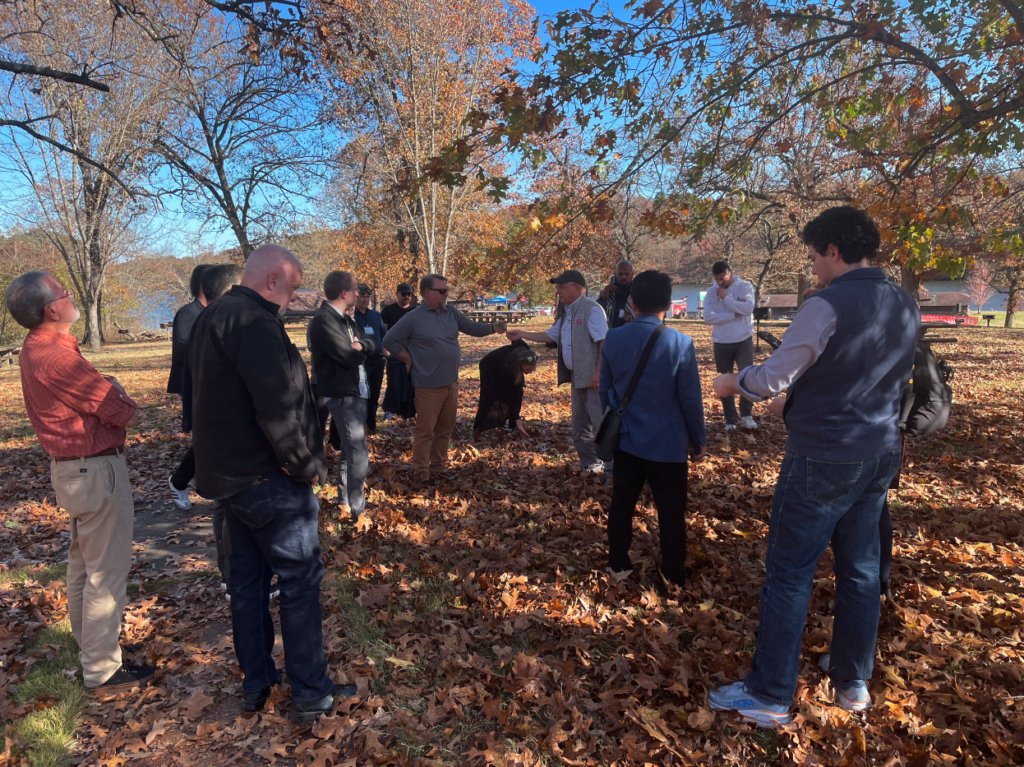
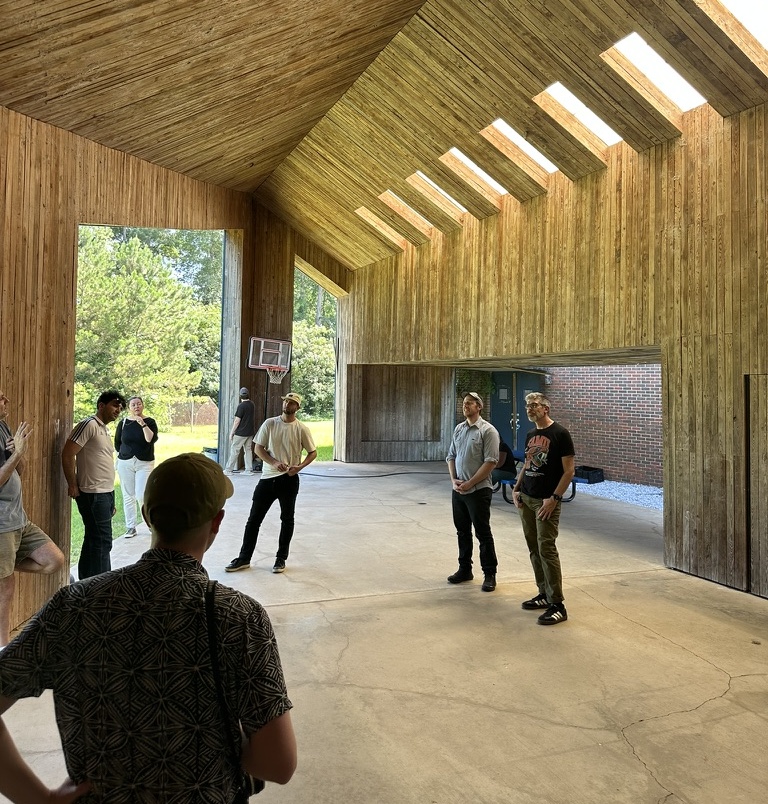
After opening sessions on timber sustainability, embodied carbon, and mass timber products (plus an industry perspective on connections and resilience from engineers at KPFF), the group headed into the field. The first stop: a working forest managed by Rex Lumber, where faculty observed active harvesting, selective thinning, and replanting cycles firsthand, followed by seeing how raw logs are milled into dimensional lumber at one of Rex’s facilities. The day continued at SmartLam, where participants walked an active CLT and glulam production floor, watching panels take shape through adhesive application, pressing, and CNC fabrication. The day closed at the Wiregrass Innovation Center in Dothan, Alabama, where that same SmartLam CLT spans a finished, community-serving building. Seeing this journey from forest to frame—all in one day—makes the supply chain tangible in a way lectures rarely can.
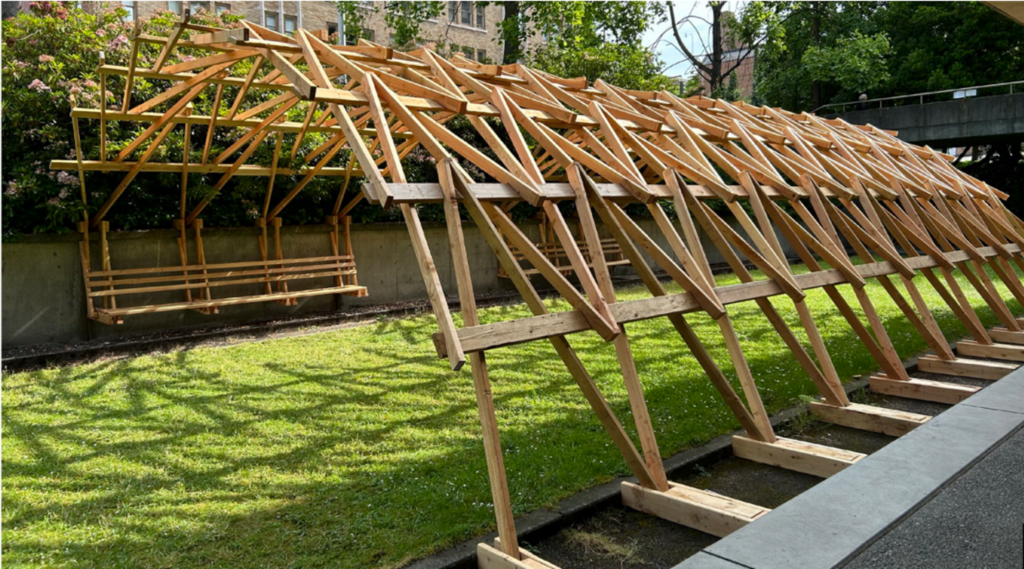
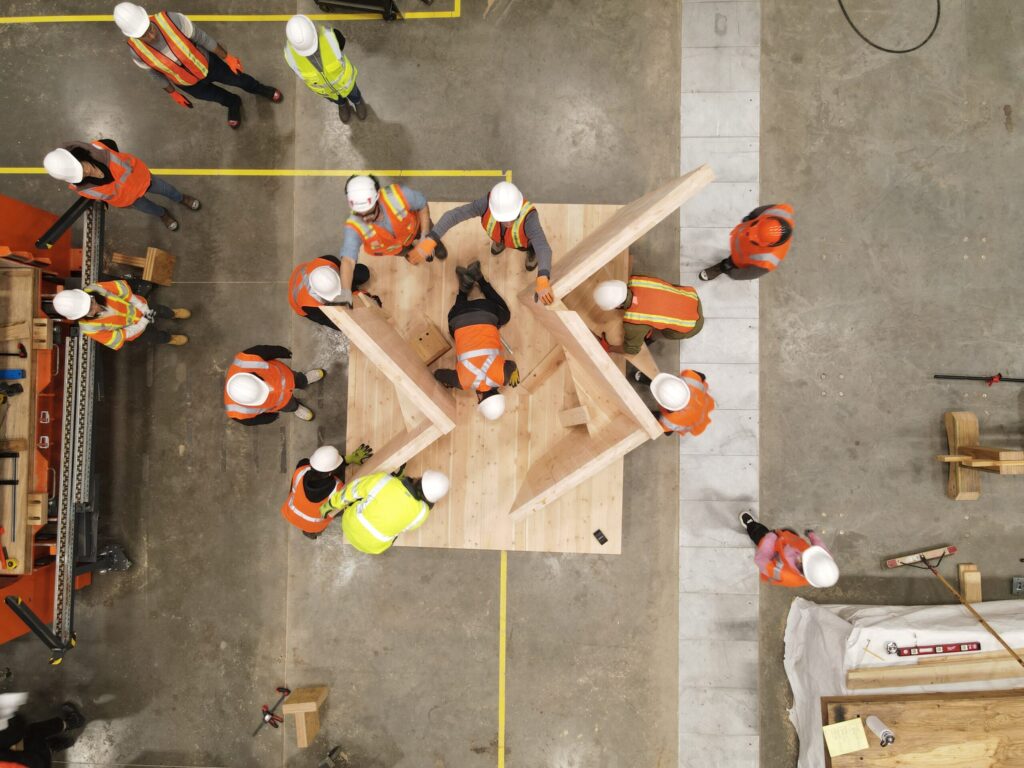
The second day centered on a visit to Auburn’s world-renowned Rural Studio. An active design-build architecture practice embedded in Auburn’s curriculum, Rural Studio has students live and work in Hale, Alabama, for a semester, designing and constructing real buildings for a real community. Faculty learned about the program’s 20-plus-year history before fourth- and fifth-year students walked them through mass timber projects under construction, including a CLT house and a glulam church, explaining how smaller mockups help resolve construction challenges before full-scale community builds. Tours of completed projects, from a fire station to Lions Park, showed what student-led, community-rooted design can achieve.
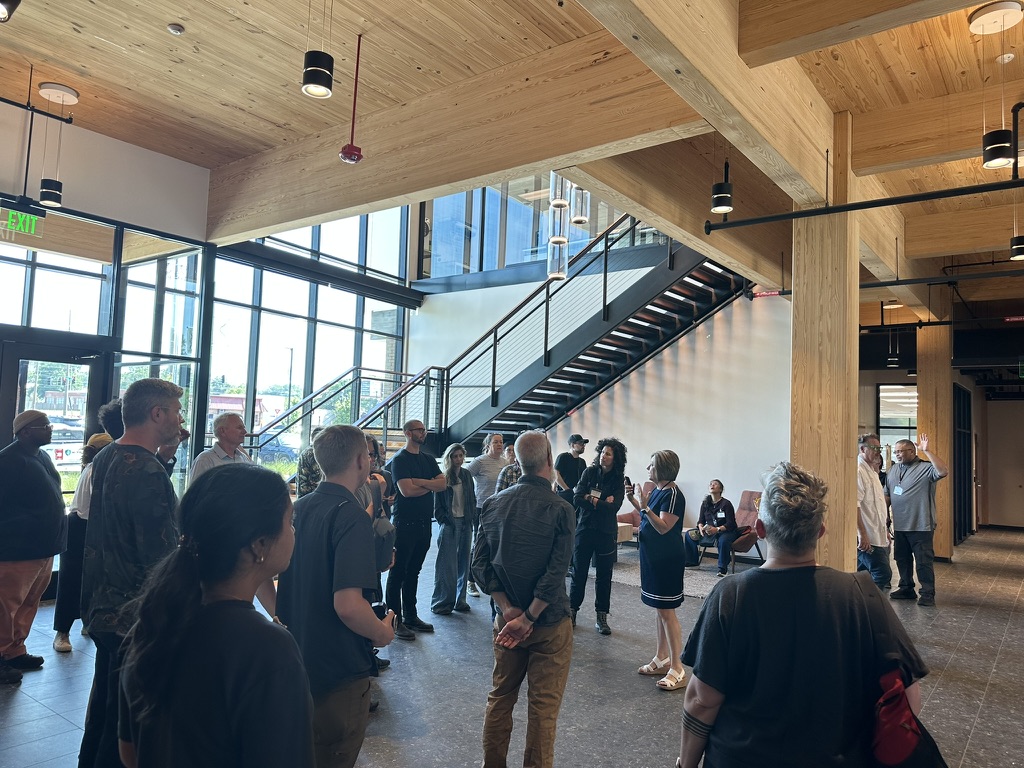
The workshop closed with tours of mass timber buildings in Atlanta, connecting the detailing, procurement, and delivery lessons from the field to built outcomes at scale. The faculty left with practical strategies and teaching resources for integrating mass timber into design studios and coursework. And, for many, a reframing of mass timber not just as a material to teach, but as a system with a full story worth bringing back to students.
Workshops like Auburn’s give faculty the firsthand experience and professional connections they need to confidently bring mass timber into their own studios and courses, preparing the next generation of architects to design and build with lower-carbon materials. For faculty considering attending a future workshop, the Auburn experience is a clear example of how much ground can be covered when education moves out of the classroom and into the forest, the mill, and the build site.